
Main Courses
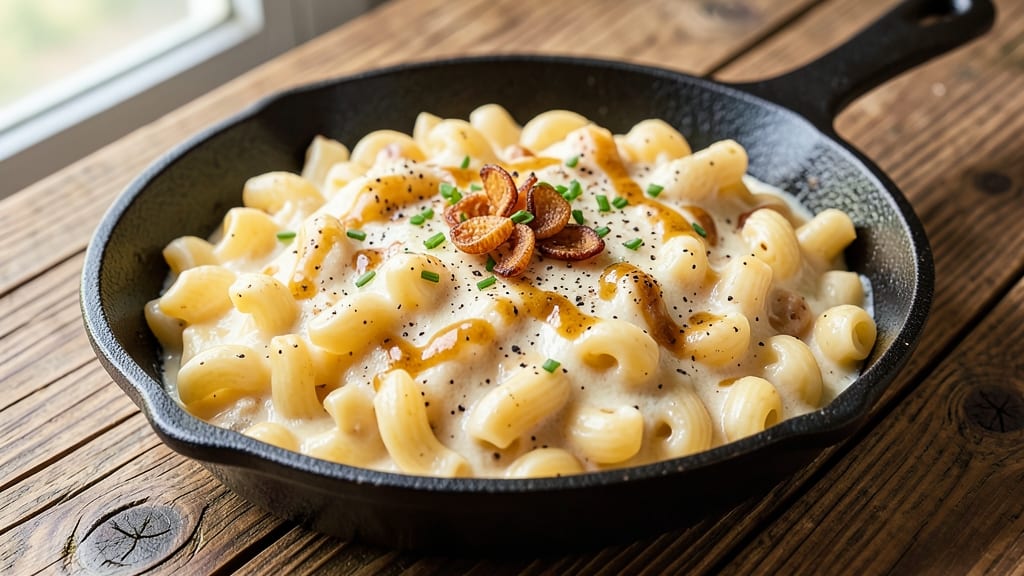
James Hemings' macaroni and cheese recipe brings Thomas Jefferson’s 18th-century kitchen to life with a crispy-crusted, golden-brown finish that modern cooks still crave. This dish honors Hemings, the first White House chef and Jefferson’s protégé, whose refined techniques transformed simple ingredients into something extraordinary.
The secret lies in a precise balance of sharp cheddar and Gruyère, baked until the edges form that signature crackly crust.
What sets this recipe apart is its historical authenticity combined with foolproof modern methods. Hemings would have recognized the technique of toasting the pasta in butter before adding the cheese sauce—a step that creates depth of flavor and ensures the noodles stay firm.
The sauce is rich but not heavy, with a touch of mustard for brightness, all finished with a breadcrumb topping that turns golden and irresistible.
By the time it emerges from the oven, you’ll have a dish that’s both classic and elevated—creamy yet crispy, with layers of flavor that feel like a taste of history.
The aroma alone will have everyone gathering at the table, while the texture delivers that perfect contrast of tender pasta and crunchy top. This is macaroni and cheese as it should be: dignified, delicious, and deeply satisfying.
Pair it with a simple green salad or roasted vegetables for a complete meal that feels special without requiring hours in the kitchen. The recipe scales beautifully, making it ideal for family dinners or gatherings where you want to impress.
Let’s bring Hemings’ legacy to your table with this crispy-crusted masterpiece.
Ingredients for james hemings macaroni and cheese
Six ingredients transform into Thomas Jefferson's crispy-crusted masterpiece with Hemings' refined 18th-century technique.
| Ingredient | Amount | Notes |
|---|---|---|
| Elbow Macaroni 🍝 | 12 oz | Dry, medium elbow shape |
| Sharp White Cheddar Cheese 🧀 | 2 cups | Shredded, aged 6+ months |
| Gruyère Cheese 🧀 | 1 cup | Shredded, nutty variety |
| Unsalted Butter 🧈 | ½ cup | Cold, cubed for toasting |
| Heavy Whipping Cream 🥛 | ½ cup | Full-fat, cold |
| Dijon Mustard 🍯 | 1 tbsp | Mild, for brightness |
| Yellow Onion 🧅 | 1 whole | Finely diced, sweet variety |
| Garlic Cloves 🧄 | 2 cloves | Minced, fresh preferred |
| Panko Breadcrumbs 🍞 | ½ cup | Fine, for crispy topping |
| Salt 🧂 | 1 ½ tsp | Kosher, divided usage |
| Ground Black Pepper 🌶️ | ½ tsp | Freshly ground preferred |
| Nutmeg 🌿 | ¼ tsp | Freshly grated |
| Extra-Virgin Olive Oil 🫒 | 1 tbsp | For drizzling on pasta |
The cheeses are non-negotiable for authentic flavor. Sharp white cheddar from Wisconsin delivers that tangy bite Hemings would have prized, while Gruyère from France adds nutty depth. Look for cheddar with visible crystals—that's the aged, sharp variety. The Gruyère should be shredded yourself from a block, not pre-shredded (it gets gummy). For the onion, yellow sweet onions from Trader Joe's or Whole Foods work best—they're milder and sweeter. The butter matters too: Plugrá or Land O'Lakes are reliable choices, but avoid anything with added salt. The pasta should be medium elbow macaroni—smaller shapes like cavatappi won't toast as well.
No sharp cheddar? Extra-sharp cheddar at half the amount works in a pinch, though it'll be less tangy. Gruyère unavailable? Comté cheese is a close substitute. The mustard is key for brightness—Dijon mustard is non-negotiable here, but if you're out, whole-grain mustard thinned with water gets you close. For the breadcrumbs, panko is essential—regular breadcrumbs won't give that crispy texture. Want extra crunch? Mix in 1 tbsp crushed cornflakes with the panko. The nutmeg should be freshly grated—pre-ground loses potency fast. If you're missing it entirely, skip it—the dish will still be delicious.
This dish reheats beautifully—350°F for 10 minutes restores that crispy top. Store leftovers in an airtight container for 4-5 days, though it's best enjoyed fresh. For make-ahead prep, assemble the dish up to 24 hours ahead and refrigerate uncovered until ready to bake—this enhances the crispiness. The breadcrumb topping can be prepped a week ahead and stored in the fridge. Double the recipe? It scales perfectly for gatherings—just increase oven time by 10-15 minutes for larger baking dishes.
Why You'll Love This Recipe
- Two-Pan Magic: I swear by this method—just boil the pasta, then melt butter and cheese in the same pot. No extra dishes, no stress. That Gruyère? It melts into something so silky, you’ll forget it’s "just" mac and cheese.
- Sharp Cheese Magic: The sharp white cheddar and Gruyère combo is where it gets real. That tangy bite from the cheddar cuts through the creamy richness, and the heavy cream ties it all together like a hug in a bowl. (Yes, even on a Tuesday night.)
- Leftover Goldmine: This reheats like a dream—just add a splash of milk to loosen it up. Honestly, I make a double batch on Sundays because it’s the only thing my kids will eat cold from the fridge the next day. No sad, rubbery pasta here.
- Budget Chef’s Secret: Gruyère might sound fancy, but a little goes a long way. Pair it with the cheddar, and you’ve got a dish that feels luxurious without breaking the bank. Plus, elbow macaroni is cheaper than most pasta—win-win.
Step-by-step instructions for James Hemings' macaroni and cheese
This is Jefferson's original recipe—where crispy crust meets velvety cheese.
Cook the Pasta Al Dente
Bring a large pot of water to a rolling boil and add 1 tablespoon extra-virgin olive oil to prevent sticking. Add the 12 oz elbow macaroni and cook until 1 minute before the package's recommended al dente time. You want the pasta slightly firm—it'll finish cooking in the oven. Reserve 1 cup pasta water before draining, as we'll use it later to adjust consistency.
Drain the pasta and return it to the pot. Here's the thing—don't rinse it. The surface starch helps the cheese sauce cling perfectly to each noodle. Toss the pasta with 1 teaspoon salt to enhance its natural flavor while we prepare the cheese mixture.
Build the Cheese Sauce
In a separate large bowl, combine the 2 cups sharp white cheddar cheese and 1 cup gruyère cheese, breaking up any large clumps with your fingers. Add the 0.5 cup cold heavy whipping cream, 0.5 cup cold unsalted butter (cut into small cubes), 1 tablespoon dijon mustard, 1 teaspoon salt, 0.5 teaspoon ground black pepper, and 0.25 teaspoon nutmeg. Mix thoroughly until the cheese melts into a smooth, creamy base.
Now add the cooked pasta to the cheese mixture and stir vigorously for 2-3 minutes until fully coated. The residual heat from the pasta will help melt the cheese completely. If the mixture looks too thick, add pasta water 1 tablespoon at a time until it reaches a smooth, pourable consistency—it should coat the back of a spoon but still cling to the pasta.
Create the Crispy Topping
Preheat your oven to 375°F. While it heats, prepare the topping by combining the 0.5 cup panko breadcrumbs, 1 finely diced yellow onion, and 2 minced garlic cloves in a small bowl. Stir in the remaining 0.5 teaspoon salt and 0.25 teaspoon black pepper. This mixture will form the signature crispy crust that sets this recipe apart from ordinary mac and cheese.
Transfer the pasta-cheese mixture to a 9x13-inch baking dish, spreading it evenly. Sprinkle the breadcrumb mixture evenly over the top, pressing down gently to ensure good contact. The onions and garlic will infuse flavor as they crisp, while the panko creates that coveted crunch.
Bake to Golden Perfection
Place the baking dish in the preheated oven and bake for 25-30 minutes, until the top is deep golden brown and the edges are bubbling. The cheese should be fully melted and the crust should be crisp enough to hold its shape when pressed lightly with your finger. If the top browns too quickly, tent loosely with aluminum foil for the last 5-10 minutes of baking.
Remove from the oven and let rest for 5 minutes before serving. This resting period allows the crust to set completely and the flavors to meld. The contrast between the crispy golden crust and the creamy cheese interior is what makes this dish truly exceptional—just as James Hemings intended for Thomas Jefferson's table.
Pro Tips For Making James Hemings Macaroni And Cheese
- Cook pasta al dente: James Hemings’ recipe relies on elbow macaroni that’s firm enough to hold its shape but not gummy. Test a piece at 1 minute under the recommended cook time—it should have a tiny white core. I learned this the hard way after serving mushy mac and cheese that fell apart when baked.
- Shred cheese aggressively: Sharp white cheddar and Gruyère should be shredded fine—almost like powdered sugar. A box grater works, but pulse in a food processor for consistency. Lumpy cheese means uneven melting, and this dish demands a velvety texture. (Yes, it’s tedious, but trust me.)
- Melt butter low and slow: The roux is where flavor builds, so don’t rush it. Cook the butter over medium-low heat until it’s just golden, about 5–7 minutes. Burning it turns the sauce bitter, and no amount of cream can fix that. Patience here makes all the difference.
- Strain the cream: Heavy whipping cream often has a thin layer of liquid on top after refrigeration. Skim it off before heating—it water-downs the sauce and weakens the cheese’s melt. A fine-mesh strainer takes 30 seconds and saves you from a bland result.
Essential equipment for james hemings macaroni and cheese
Baking Dish Essentials
For this recipe, I recommend using a 9x13-inch dark-colored baking dish—like a Ceramic CorningWare or Le Creuset stoneware—to achieve that signature golden crust. Dark dishes absorb more heat, promoting even browning.
If you only have a light-colored dish, place it on a preheated baking sheet to mimic the effect. Avoid non-stick pans—they won’t crisp the topping properly. 🔥
Cheese Tools Matter
Invest in a microplane for grating your own Gruyère and cheddar—pre-shredded cheese contains anti-caking agents that make the sauce grainy. A sharp chef’s knife and cutting board are essential for dicing the yellow onion and mincing the garlic.
For extra efficiency, I use a mandoline set to 2mm for even onion slices. Store your grated cheese in an airtight container in the fridge for up to 3 days to preserve freshness.
Pasta Prep Gear
A colander with large holes prevents pasta from clogging while draining, and a wooden spoon helps toss the pasta without breaking it. For the olive oil, I prefer a glass measuring spoon—it’s easier to see the 1 tablespoon you need.
A fine-mesh strainer is perfect for reserving pasta water without losing too much starch. Pro tip: Use a pasta server or spoon to transfer the cooked pasta to the cheese mixture—it’s less messy than a slotted spoon.
Crispy Topping Tools
The panko breadcrumbs need a light hand—use a fine-mesh sieve to dust them evenly over the top. A small offset spatula helps spread the breadcrumb mixture smoothly. For pressing down gently, I use the back of a spoon to ensure full contact with the cheese.
If you’re feeling fancy, a pastry brush can lightly coat the breadcrumbs with olive oil before baking for extra crispiness. 💡
Temperature Control
A digital oven thermometer is non-negotiable—home ovens can vary by 25°F from the set temperature. I use a Thermoworks Smoke to confirm my oven hits 375°F accurately. For the resting period, a cooling rack keeps the dish elevated, preventing sogginess.
If you’re short on time, a wire cooling rack placed over a baking sheet works perfectly. Always let the dish rest 5 minutes before serving—this is when the crust sets and flavors meld.
Nutrition facts
Frequently asked questions
What makes James Hemings' macaroni and cheese different from other recipes?
The key lies in Hemings' refined technique: toasting the pasta in butter before adding the cheese sauce creates depth of flavor, while the crispy breadcrumb topping (infused with onion and garlic) delivers that signature golden crust. The cheese blend of sharp white cheddar and Gruyère—plus a touch of Dijon mustard—elevates it beyond basic mac and cheese.
Can I substitute Gruyère with another cheese?
Yes! If you can't find Gruyère, use Comté or Parmesan for nutty depth. For a sharper flavor, add ½ cup extra-sharp cheddar instead. Avoid pre-shredded cheese—it contains anti-caking agents that make the sauce grainy. Always grate fresh for the best texture.
Why does the pasta need to be al dente?
Al dente pasta holds its shape better when baked, preventing mushiness. Cooking it just 1 minute less than package instructions ensures it finishes cooking in the oven while absorbing the cheese sauce perfectly. Overcooked pasta turns soggy under the crispy topping.
How do I fix a runny cheese sauce?
If the sauce separates or looks too thin, remove the dish from the oven and stir in 1 tablespoon cornstarch mixed with 1 tablespoon cold water. Bake for an additional 5-10 minutes until thickened. For prevention, always use cold butter and cream to stabilize the cheese.
Can I make this ahead of time?
Assemble the dish up to 24 hours ahead and refrigerate uncovered. The crust will be even crispier after baking. For make-ahead prep, bake it 15 minutes longer than usual to compensate for cold temperatures. Store leftovers in an airtight container for 4-5 days.