
Main Courses
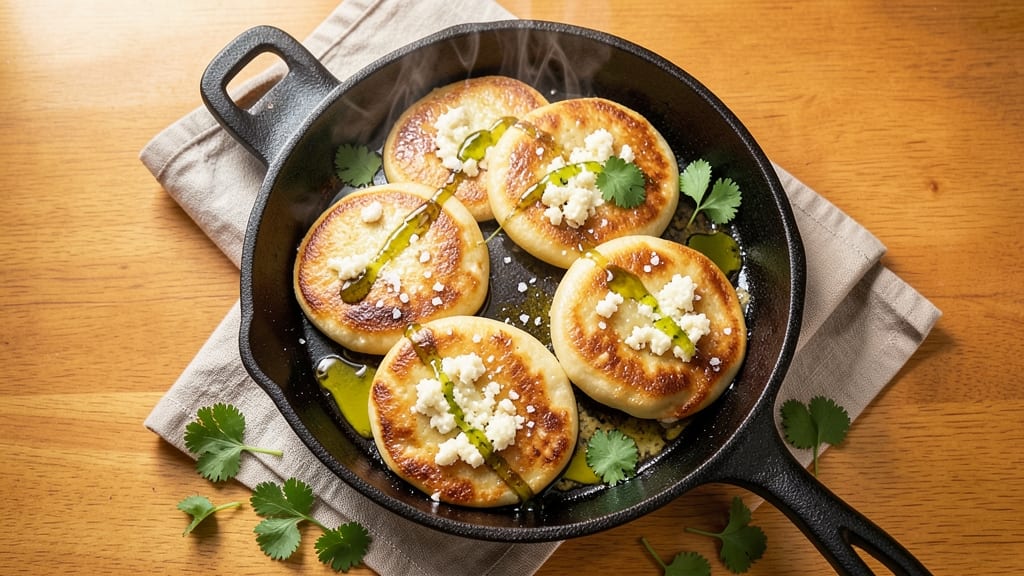
This cheese pupusa recipe brings the vibrant flavors of Salvadoran street food into your kitchen with its signature crispy edges and gooey queso fresco hearts.
After years of perfecting the technique, I've mastered the balance between tender dough and that irresistible golden crust—just like the ones sold by vendors in San Salvador.
The secret lies in hand-rolling the dough thin enough to crisp while keeping the center soft and pillowy, a method that transforms simple ingredients into something extraordinary.
What makes these pupusas truly special is their simplicity—just five basic ingredients create the dough, yet the process demands patience and precision.
You'll work with masa harina (corn flour), which develops a delicate texture when properly hydrated, and queso fresco, that tangy, crumbly cheese that melts into perfect pockets when cooked just right.
The dough is rolled by hand, a traditional technique that ensures even thickness and that coveted crispy exterior, while the filling stays gooey and cohesive.
By the time you flip that first pupusa, you'll be rewarded with golden-brown edges that shatter slightly when bitten, giving way to a soft, fluffy interior filled with melted cheese. The aroma alone—warm corn tortillas meeting salty cheese—will have everyone at your table asking for seconds.
This recipe delivers restaurant-quality results with just a griddle and a few kitchen essentials, proving that authentic Salvadoran flavors are well within reach for any home cook.
Serve these crispy, cheesy delights with curtido (a tangy Salvadoran slaw) or a simple tomato-onion salad for a complete meal that feels like a taste of Central America.
The beauty of pupusas is their versatility—once you master the cheese version, you can experiment with fillings like loroco (a delicate flower) or chicharrón (crispy pork) to create endless variations. Let's get cooking!
Ingredients for cheese pupusa
Five simple ingredients transform into crispy, cheesy Salvadoran street food perfection.
| Ingredient | Amount | Notes |
|---|---|---|
| Masa Harina (Corn Flour) 🌽 | 2 cups | Maseca or Bob's Red Mill preferred |
| Warm Water 💧 | 1 ¼ cups | 110-115°F for optimal hydration |
| Queso Fresco 🧀 | 1 ½ cups | Crumbled, not pre-shredded |
| Vegetable Oil 🫒 | ¼ cup | For griddle cooking |
| Salt 🧂 | ½ tsp | Fine sea salt preferred |
| Olive Oil 🫒 | 1 tbsp | For dough rolling |
| Lime Juice 🍋 | 1 tbsp | Freshly squeezed |
The masa harina is the foundation—Maseca or Bob's Red Mill are the gold standards, but any corn flour will work. Warm the water to 110-115°F (just warm to the touch) to hydrate the masa properly without overworking it. Whole Foods or Latin markets carry the best queso fresco, but if you can't find it, cottage cheese or farmer's cheese work in a pinch. The key is crumbling it by hand—pre-shredded cheese gets gummy. For the oil, vegetable or canola works best on the griddle, while extra-virgin olive oil is perfect for rolling the dough to prevent sticking.
No queso fresco? Cottage cheese or farmer's cheese are the closest substitutes—drain well if using cottage cheese. Short on lime juice? Lemon juice works too, but it's slightly more tart. The dough should be pliable but not sticky—if it's too dry, add a splash of warm water; if too wet, knead in a bit more masa. For extra crispiness, brush the pupusas with a bit of olive oil before flipping. And if you're feeling adventurous, try adding a pinch of cumin or achiote to the dough for a deeper Salvadoran flavor.
Keep the masa mixture covered with a damp towel while you work—it dries out fast. These pupusas reheat beautifully: wrap in foil and warm in a 350°F oven for 10 minutes. They freeze well too—place cooled pupusas on a tray, freeze solid, then transfer to a bag. 3 months in the freezer, and they crisp up perfectly when reheated. For serving, keep a small bowl of warm queso fresco on the table—guests will want to add extra to their plates!
Why You'll Love This Recipe
- Five-Ingredient Magic: The pantry already has what you need—just masa harina, water, cheese, oil, and salt. No fancy shopping lists or last-minute grocery runs. Honestly, I’ve made these with just those five things while staring at an empty fridge.
- Creamy-Crisp Perfection: That golden crust gives way to molten queso fresco—saltier, tangier, and way more satisfying than your average grilled cheese. Between us, the first bite always makes me pause mid-conversation.
- Game for Any Gathering: Toss a batch in the freezer for game day, pack them in lunches, or serve them at a picnic. They reheat like a dream, and honestly? My college friends still ask for these when I visit.
- Budget-Friendly Staple: A single bag of masa harina stretches for dozens—no wasted ingredients here. The cheese stretches thin but still delivers, and the oil? Just enough for crispy edges without breaking the bank. (Yes, even on a Tuesday night.)
Step-by-step instructions for cheese pupusa recipe
Here's the method to achieve authentic Salvadoran street food with perfectly crispy edges and gooey cheese centers.
Prepare the Dough with Warm Water
In a large mixing bowl, combine the 2 cups masa harina (corn flour) with the 0.5 tsp salt. Gradually add the 1.25 cups warm water (about 110-115°F) while mixing with your hands or a fork. The dough should form a soft, pliable ball that's slightly sticky but not wet.
If the dough feels too dry, add 1 teaspoon warm water at a time until it comes together. If it's too sticky, knead in 1 teaspoon masa harina until it reaches the right consistency. The ideal dough should hold its shape when pressed but still be soft enough to roll. Cover the bowl with a damp towel and let it rest for 10 minutes—this allows the gluten to relax, making it easier to work with later.
Incorporate Queso Fresco and Form Pupusa Balls
After the dough rests, add the 1.5 cups crumbled queso fresco to the bowl. Using your hands, gently knead the cheese into the dough until evenly distributed. Avoid overworking it—just enough to incorporate the cheese without developing toughness. The mixture should remain soft and pliable.
Divide the dough into 8 equal portions (about 2 tablespoons each). Roll each portion into a ball and flatten slightly into a disc shape. Place them on a plate and cover with another damp towel to prevent drying. The cheese will melt beautifully during cooking, creating that signature gooey center.
Roll and Press the Pupusas
Lightly oil your hands with 1 tablespoon olive oil to prevent sticking. Take one dough ball and press it between your palms to flatten into a 3-inch diameter circle. The edges should be slightly thicker than the center—this creates the classic Salvadoran shape with crispy edges and a soft middle.
If the dough resists rolling, let it rest for 2-3 minutes before trying again. The key is to keep the center slightly thicker while maintaining even pressure. As you work, keep the remaining balls covered to maintain moisture. You'll have 4 perfect pupusas ready for cooking once all are shaped.
Cook on a Hot Griddle with Vegetable Oil
Heat a clean griddle or skillet over medium-high heat until it's hot enough to sizzle when you add a drop of vegetable oil. Add 0.25 cup vegetable oil to the griddle and spread it evenly with a paper towel—this prevents sticking and creates the perfect crispy texture.
Place 2 pupusas on the griddle at once, spacing them about 1 inch apart. Cook for 3-4 minutes per side until the bottoms are deep golden brown and crispy, with small bubbles forming on the surface. Watch carefully—they're ready when the edges pull away from the griddle easily. Transfer to a plate and keep warm while you cook the remaining pupusas.
Finish with Lime Juice for Bright Flavor
Once all pupusas are cooked, drizzle each with 1 tablespoon lime juice (divided among all). The acidity cuts through the richness of the cheese and enhances the crispy texture. Serve immediately with curly fries or a simple slaw on the side for the full Salvadoran experience.
Each pupusa should have a crispy, golden-brown exterior that gives way to a soft, cheesy interior with pockets of melted queso fresco. If any seem undercooked, return them to the griddle for 30 seconds until heated through. Enjoy while warm—they're best eaten fresh from the griddle!
Pro Tips For Making Cheese Pupusa
- STRETCH THE MASA: Mix the masa harina and warm water until it forms a smooth, slightly tacky dough—think playdough consistency, not crumbly. Overmixing makes it tough; underworking it means gaps in your pupusas. Stop when it holds together but still feels slightly soft (yes, even if it looks dry at first).
- SALT THE QUESO: Crumble the queso fresco into small, even pieces and toss them with a pinch of salt before folding into the masa. Fresh cheese lacks seasoning, and this step ensures every bite has that bright, balanced flavor—no need to chase saltiness later.
- PRESS HARD, COOK FAST: Use a well-oiled skillet on medium-high heat, then press each pupusa firmly with a spatula for 10 seconds before letting it cook. Skipping the initial press leads to uneven thickness, and low heat means soggy centers. Trust the sizzle—it’s your cue they’re ready to flip.
- REST THE DOUGH: Let the mixed masa sit covered for 15 minutes after combining. I learned this the hard way—rushing leads to cracks when shaping. The rest helps the gluten relax (yes, corn masa has a little), making the dough easier to handle and the pupusas less likely to fall apart.
Essential equipment for this dish
Griddle Mastery
Your griddle is the star of this recipe, so invest in a quality one—I recommend a cast-iron griddle like the Lodge 12-inch for even heat distribution. If you don’t have one, a non-stick skillet will work in a pinch, but avoid aluminum as it burns easily.
Preheat your griddle over medium-high heat until it’s hot enough to make a drop of oil sizzle. This ensures proper browning and that signature crispy texture. 🔥
Hand Rolling Tools
Traditional pupusas are rolled by hand, which gives you the best control over thickness. Lightly oil your palms with extra-virgin olive oil to prevent sticking—this is especially important when working with sticky masa dough.
For extra precision, some cooks use a rolling pin, but I find hand-rolling creates the perfect uneven edges that crisp beautifully. Keep a small bowl of oil nearby to re-oil your hands as needed.
Cheese Prep Essentials
Queso fresco is non-negotiable for authentic flavor, but if you can’t find it, cottage cheese (drained and crumbled) works well. Avoid pre-shredded cheese—it contains anti-caking agents that make the filling gummy.
Use a microplane or your hands to crumble the cheese finely. For extra convenience, buy pre-crumbled queso fresco from Latin markets or the international aisle of larger grocery stores. 🧀
Oil and Heat Control
Vegetable oil has the highest smoke point for griddle cooking, but canola oil is a great budget-friendly alternative. Use a paper towel to spread a thin, even layer of oil on the griddle before cooking—this prevents sticking and ensures crispy edges.
Keep your heat at medium-high (around 350-375°F) to avoid burning the outside before the inside cooks through. A digital thermometer helps maintain consistency.
Dough Resting Tools
Cover your dough with a damp kitchen towel while resting to prevent drying. If you’re making pupusas ahead, place them on a parchment-lined tray and refrigerate for up to 2 hours before cooking.
For extra crispiness, brush the cooked pupusas with a tiny bit of olive oil before serving. A small bowl of warm water nearby helps keep your hands from sticking while shaping.
Serving Accessories
Serve pupusas with curly fries or a simple tomato-onion salad for the full Salvadoran experience. Keep a lime wedge on the table for guests to squeeze fresh juice over their pupusas.
A small plate of extra queso fresco encourages second helpings—trust me, everyone will want more. For a festive touch, add fresh cilantro or red onion slices as garnishes. ✨
Nutrition facts
Frequently asked questions
Why does the dough need to rest before rolling?
Resting the dough for 10 minutes allows the gluten to relax, making it much easier to roll out evenly. This step prevents tearing and helps create that perfect balance of crispy edges and soft centers. Think of it like letting bread dough rest—it transforms the texture from tough to tender!
Can I make pupusas ahead of time?
Shape the pupusas and refrigerate them for up to 2 hours before cooking. For best results, place them on a parchment-lined tray. They also freeze beautifully—just wrap cooled pupusas tightly in plastic and freeze for up to 3 months. Reheat in a 350°F oven for 10 minutes to restore crispiness.
What if my pupusas tear while rolling?
Don’t panic! If dough tears, simply gather the pieces and reshape them gently. Keep your hands lightly oiled and work quickly to maintain moisture. If the dough feels too dry, add a tiny splash of warm water and knead it in. Patience is key—even professional cooks sometimes encounter this!
Can I substitute queso fresco with another cheese?
Yes, but with a few adjustments. Cottage cheese (well-drained and crumbled) works well, or try farmer’s cheese. Avoid pre-shredded cheese—it contains anti-caking agents that make the filling gummy. If using a different cheese, add an extra 1 tablespoon lime juice to balance the flavor.
How do I prevent my pupusas from sticking to the griddle?
Use a paper towel to spread a thin, even layer of vegetable oil on the griddle before cooking. Keep your heat at medium-high and avoid overcrowding the griddle. If needed, brush the cooked side with a bit of oil before flipping. A well-oiled griddle is the secret to perfectly crispy pupusas!