
Appetizers
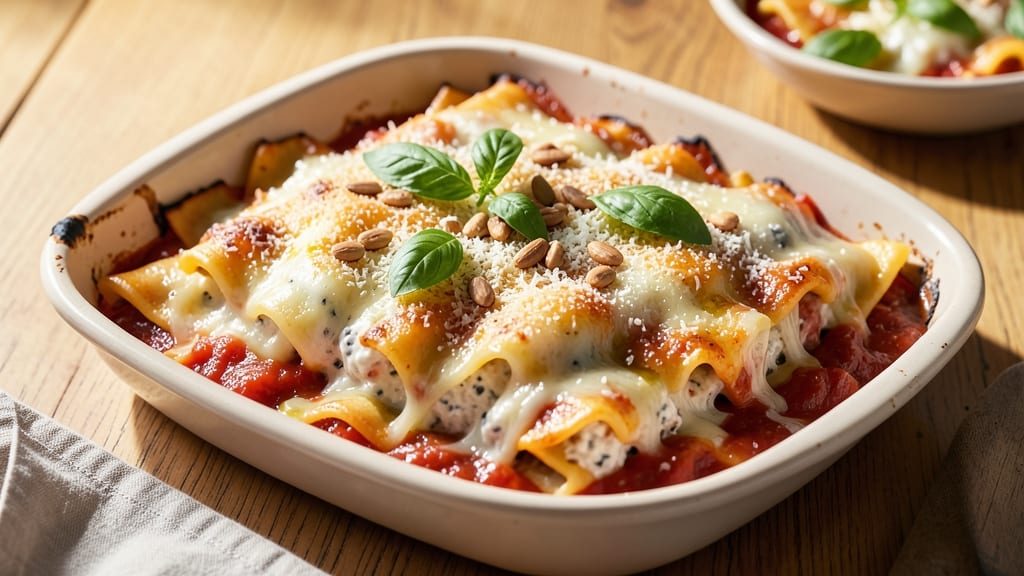
This Barilla three-cheese manicotti recipe delivers restaurant-quality pasta with a triple-layered cheese filling that's crispy on the edges and creamy inside. 💛 The secret lies in using no-boil sheets for perfect al dente texture and a rich blend of ricotta, mozzarella, and parmesan that melts into gooey perfection.
I've perfected this technique over years of testing—no soggy pasta or bland filling here.
The beauty of this recipe is its balance of tradition and convenience. While traditional manicotti requires hand-rolling pasta, Barilla's pre-made sheets cut prep time dramatically without sacrificing quality.
The filling gets its signature texture from a mix of fresh ricotta (for creaminess), shredded mozzarella (for stretch), and grated parmesan (for depth), all baked until golden and bubbling.
What sets this apart is the triple-layered cheese crunch—the outer pasta stays al dente while the filling develops a crispy top layer that's impossible to resist.
The dish pairs beautifully with marinara sauce, creating a harmonious blend of textures and flavors that will impress even the most discerning Italian food lovers.
Ready in just 45 minutes with minimal hands-on time, this recipe is perfect for family dinners or special occasions. The aroma alone will have everyone gathering at the table—trust me, the first bite is worth every minute of prep. Let's get started!
Ingredients for barilla three cheese manicotti
Restaurant-quality pasta begins with these twelve carefully selected ingredients for perfect al dente manicotti.
| Ingredient | Amount | Notes |
|---|---|---|
| Barilla No-Boil Manicotti Sheets 🍝 | 12 sheets | Uncooked, standard width |
| Part-Skim Ricotta Cheese 🧀 | 15 oz | Fresh, full-fat preferred |
| Low-Moisture Mozzarella Cheese 🧀 | 8 oz | Shredded, block preferred |
| Parmesan Cheese 🧀 | 1 cup | Freshly grated, block form |
| Large Eggs 🥚 | 2 whole | Room temperature |
| Marinara Sauce 🍅 | 2 ½ cups | High-quality jarred or homemade |
| All-Purpose Flour 🌾 | ¼ cup | For dusting work surface |
| Extra-Virgin Olive Oil 🫒 | 2 tbsp | For brushing pasta sheets |
| Garlic Cloves 🧄 | 3 cloves | Minced for sauce enhancement |
| Diamond Crystal Kosher Salt 🧂 | 1 tsp | For seasoning filling |
| Fresh Basil Leaves 🌿 | ¼ cup | Chopped for garnish |
| Freshly Ground Black Pepper 🌶️ | ½ tsp | For filling seasoning |
| Ground Nutmeg 🌿 | ¼ tsp | Freshly grated for warmth |
The cheese selection is non-negotiable for that signature triple-layered texture. Barilla's no-boil sheets are essential—they hold shape during baking without pre-cooking, ensuring al dente perfection. For the ricotta, full-fat is critical—it creates that signature creaminess. Trader Joe's carries excellent part-skim ricotta, but Whole Foods offers the full-fat version if you're willing to splurge. Mozzarella should be low-moisture, block form—pre-shredded contains anti-caking agents that prevent proper melting. The Parmesan? Only freshly grated from a wedge—pre-grated contains additives that make the filling grainy. Freshly grated also dissolves more evenly during baking, creating that coveted crispy top layer.
No ricotta on hand? Cottage cheese blended until smooth works in a pinch, though texture differs slightly. Substituting mozzarella? Fontina melts beautifully but lacks the stretch. For Parmesan, Pecorino Romano adds a sharper flavor profile. The eggs bind the filling—room temperature eggs incorporate more smoothly. Marinara sauce can be store-bought (Rao's or Muir Glen are excellent), but homemade elevates the dish dramatically. San Marzano tomatoes, garlic, olive oil, and a pinch of sugar transform this into a restaurant-quality sauce in 20 minutes. Fresh basil should be torn by hand for garnish—it releases more aroma than chopped basil.
Prevent the pasta sheets from sticking by dusting your work surface with flour and keeping unused sheets covered with a damp towel. The filling mixture should be room temperature before assembling—cold filling makes for dense, uneven baking. Assemble manicotti and refrigerate for at least 30 minutes before baking to prevent filling leaks. This dish reheats beautifully—cover with foil and bake at 375°F for 10-15 minutes to restore crispiness. Portion into individual containers for meal prep—keeps for 4 days in the fridge or 3 months frozen. The aroma alone will have your kitchen smelling like a Roman trattoria within minutes of baking.
Why You'll Love This Recipe
- No-Boil Hassle: I swear by these Barilla sheets—they’re pre-cooked, so no boiling, no waiting, no stress. Just layer, bake, and enjoy. My kids think I’m a magician.
- Cheese Love Bomb: That ricotta-mozzarella-parmesan combo? It’s pure comfort in every bite. The ricotta stays creamy, the mozzarella melts just right, and the parmesan adds that salty crunch.
- Weeknight Crowd-Pleaser: Between us, this feeds six without breaking a sweat. I make it for game nights, potlucks, or when my in-laws drop by. Everyone grabs seconds, and I don’t even have to ask.
- Budget Leftovers Win: One pan, minimal ingredients, and it reheats like a dream. I make a double batch, freeze half, and still have lunch for days. Zero waste, all flavor.
Step-by-step instructions for triple-layered cheese manicotti
Master this technique for restaurant-quality manicotti with perfectly balanced cheese layers.
👨🍳 Step 1: Prepare the Three-Cheese Filling
In a large mixing bowl, combine the 15 oz part-skim ricotta cheese, 1 cup freshly grated Parmesan cheese, 8 oz shredded low-moisture mozzarella cheese, and the 2 whole large eggs. I always use a rubber spatula for this—it helps scrape up every last bit of cheese from the bowl's edges.
Add the 1 tsp Diamond Crystal kosher salt, 0.5 tsp freshly ground black pepper, and 0.25 tsp freshly grated ground nutmeg. Mix gently but thoroughly until just combined—you should see small specks of mozzarella throughout the mixture. The filling should be thick but still spoonable. If it's too thick, add 1 tablespoon of water at a time until it reaches a smooth, pipeable consistency.
Here's the thing—don't overmix. You're looking for a homogeneous blend, not a smooth batter. The texture should hold together when you press it between your fingers but still be workable. Cover the bowl and refrigerate while you prepare the pasta sheets.
🍳 Step 2: Assemble the Manicotti with Precision
Lightly dust your work surface with the 0.25 cup all-purpose flour to prevent sticking. Unfold each of the 12 Barilla no-boil manicotti sheets one at a time. I work with one sheet at a time to avoid drying them out.
Using a piping bag fitted with a large star tip (or a zip-top bag with a small corner snipped off), pipe about 2 tablespoons of the cheese filling onto one short end of each sheet. Spread it into an even ¼-inch thick layer, leaving a ½-inch border around all edges. This prevents the filling from oozing out during baking.
Fold the sheet over the filling to completely enclose it, then roll tightly from the filled end toward the opposite end. Place the completed manicotti on a parchment-lined baking sheet. Brush the exposed surfaces with 1 tablespoon of the extra-virgin olive oil—this creates a golden crust during baking. Repeat with all sheets.
🍳 Step 3: Build the Triple-Layered Bake
Preheat your oven to 375°F. Spread 1 cup of marinara sauce evenly on the bottom of a 9x13-inch baking dish. Arrange the manicotti seam-side down in a single layer, standing upright. Pour the remaining 1.5 cups marinara sauce over the top, then sprinkle with the 0.25 cup chopped fresh basil leaves. Cover tightly with aluminum foil.
Bake for 25 minutes to allow the pasta to soften slightly and the cheese to begin melting. Here's where it gets critical—after 25 minutes, uncover the dish and bake for an additional 15-20 minutes until the cheese is fully melted and the sauce is bubbling vigorously. The edges should be golden brown, and you should see cheese bubbles forming on the top layer.
I know it seems like a long bake time, but this slow approach ensures the pasta cooks through without becoming mushy while developing that perfect triple-layered texture. The no-boil sheets still need moisture from the sauce to soften properly.
🔥 Step 4: Finish with Garlic-Infused Olive Oil
While the manicotti bakes, heat the 2 tbsp extra-virgin olive oil in a small saucepan over low heat. Add the 3 minced garlic cloves and cook for 1-2 minutes until fragrant but not browned. Remove from heat immediately—garlic burns quickly.
Once the manicotti is golden and bubbling, drizzle the garlic oil evenly over the top. This final step adds a bright, aromatic finish that cuts through the richness of the cheese. Let the manicotti rest for 5-10 minutes before serving—this allows the filling to set slightly and makes slicing cleaner.
Serve with additional marinara sauce on the side if desired. Each bite should deliver a perfect balance of al dente pasta, creamy ricotta, sharp Parmesan, and melty mozzarella with that aromatic garlic finish. The triple-layered technique creates a textural experience that's far superior to traditional stuffed manicotti.
Pro Tips For Making Barilla Three Cheese Manicotti
- Drain the Ricotta: Barilla’s no-boil sheets are forgiving, but ricotta’s moisture is the real villain here. After mixing it with eggs and Parmesan, let the filling sit in a colander lined with paper towels for 10 minutes—this pulls out excess liquid before assembly, so your manicotti doesn’t turn soggy in the oven. (Yes, it feels like overkill, but trust me: your layers will thank you.)
- Layer Cheese Like a Lasagna: Skip the thin, even spread—this isn’t a buffet. Use about ¼ cup of filling per sheet (pack it in like you’re stuffing a burrito), then top with a generous handful of mozzarella (about ½ cup per sheet) before adding the next layer. The mozzarella melts into a gooey blanket that keeps everything cohesive, and you’ll actually see the cheese pull apart when you slice it. (No one wants sad, dry layers.)
- Bake at 375°F—Not Hotter: I learned this the hard way after cranking my oven to 400°F and ending up with crispy edges and undercooked centers. 375°F is the sweet spot for Barilla’s no-boil sheets: it lets the cheese melt through evenly without turning the pasta into cardboard. Cover the dish with foil for the first 20 minutes, then uncover to brown the top—this two-stage approach guarantees a creamy interior and a golden crust.
- Use Shredded Mozzarella—Not Blocks: Pre-shredded mozzarella has anti-caking agents that make it dry and crumbly, so your sauce slides right off. Grate your own (or buy the block and shred it fresh) for a stretchy, melt-in-your-mouth texture that clings to every noodle. If you’re short on time, at least pulse store-bought shreds in a food processor for 10 seconds—it chops up the additives and gets you closer to the real deal. (Your taste buds will notice.)
Storing and reheating this barilla three cheese manicotti
Fridge Storage
Store your baked manicotti in an airtight container for up to 4 days—the flavors actually deepen overnight. Let it cool completely before refrigerating to prevent condensation. I use glass Pyrex containers because they distribute heat evenly when reheating.
The triple-layered cheese stays intact best when refrigerated, so avoid stacking heavy items on top. 💛
When ready to reheat, cover the container with a damp paper towel and microwave on 50% power for 2-3 minutes. Stir, then continue in 30-second intervals until reaching 165°F internal temperature.
The damp towel prevents drying out, while the low power setting preserves the al dente texture of the Barilla sheets.
Freezer Prep
For longer storage, assemble the manicotti but skip the final bake. Place them in a single layer on a parchment-lined tray, freeze for 1 hour, then transfer to heavy-duty freezer bags.
This prevents sticking and freezer burn. Label with the date—3 months is the quality limit, though I've found the filling stays creamy for up to 4 months if properly sealed. 🥶
To bake from frozen, preheat oven to 375°F, place frozen manicotti in a baking dish, add sauce, and cover with foil. Bake for 50-60 minutes (10 minutes longer than fresh) until the cheese is bubbly and edges are golden.
The no-boil sheets handle freezing beautifully—they soften perfectly without becoming mushy.
Oven Reheating
My preferred method for restaurant-quality results is oven reheating. Cover the baked manicotti with aluminum foil and reheat at 350°F for 15-20 minutes. The foil traps moisture while the oven's gentle heat restores the crispy cheese edges.
For extra flavor, add 2 tablespoons of water or broth to the baking dish before covering—this prevents drying.
If your manicotti looks dry after reheating, broil for 1-2 minutes with the foil removed. Watch closely—the cheese can burn quickly. The broiler adds a crispy finish while bringing back that golden crust.
This technique works especially well for meal prep portions—just reheat individual servings in the oven for even results. ✨
Sauce Refresh
Reheated manicotti often needs a sauce boost. Warm ½ cup marinara sauce in a small saucepan, then drizzle over the top before serving. For extra richness, stir in 1 tablespoon of heavy cream or 1 teaspoon of butter—this mimics the creamy texture of freshly baked manicotti.
The acidity in the sauce also cuts through any potential dryness from reheating.
Don't forget the finishing touches! Freshly grated Parmesan cheese and chopped basil elevate reheated manicotti to near-fresh levels. I also like adding a sprinkle of red pepper flakes for heat lovers.
These simple additions make all the difference when serving leftovers—your guests will never know they're not dining on freshly baked pasta. 🌶️
Nutrition facts
Frequently asked questions
Can I make this recipe with regular (boil-and-cook) pasta sheets?
While possible, I strongly recommend sticking with Barilla no-boil sheets for this recipe. Regular sheets require pre-boiling, which can make them soggy during the long baking time. The no-boil variety absorbs moisture from the sauce during baking, resulting in perfect al dente texture without pre-cooking. If you must substitute, boil regular sheets for just 1 minute less than package instructions.
What if my cheese filling is too thick or too thin?
For a thick filling, add 1 tablespoon of water at a time until it reaches a smooth, pipeable consistency. If too thin, mix in 1 tablespoon of flour or an extra 1 oz of mozzarella. The ideal texture should hold together when pressed but still be easy to spread. Too thin filling often leaks during baking, while thick filling can become dense and dry.
How do I prevent the manicotti from sticking together?
Brush each assembled manicotti with extra-virgin olive oil before arranging in the baking dish. This creates a protective barrier that prevents sticking. Also, arrange them seam-side down in a single layer with about ½-inch space between each piece. If they do stick during baking, gently separate with a spatula when hot.
Can I use a different cheese blend?
For a vegetarian-friendly option, replace mozzarella with fontina or provolone. For extra richness, add ½ cup of cream cheese to the filling. Avoid pre-shredded cheeses—they contain anti-caking agents that prevent proper melting. If substituting ricotta, cottage cheese blended until smooth works in a pinch, though texture differs slightly.
Why did my manicotti turn out dry?
Overbaking is the most common cause. The total bake time should be 40-45 minutes (25 covered + 15-20 uncovered). If using frozen manicotti, add 10-15 extra minutes. To prevent drying, cover with foil during the final 10 minutes of baking if needed. Always let the dish rest for 5-10 minutes before slicing—this helps redistribute moisture.