
Appetizers
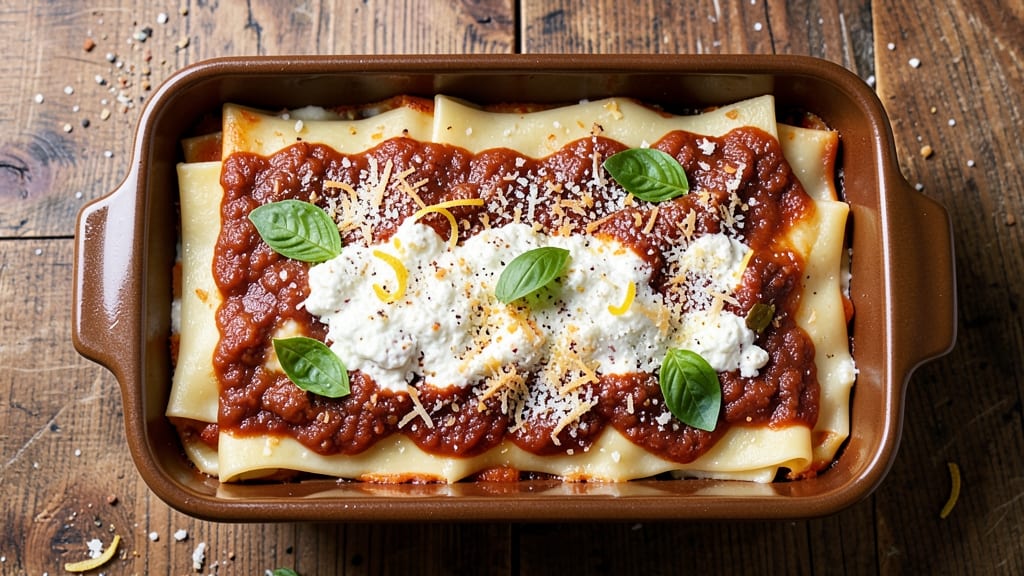
America's Test Kitchen cottage cheese lasagna delivers all the rich, comforting flavors of classic lasagna—without the heaviness. The secret lies in cottage cheese, which creates a creamy, lightened-up texture while keeping each layer tender and flavorful.
This isn't your grandmother's dense lasagna; it's a revelation for anyone who loves lasagna but wants something lighter that still satisfies cravings.
The magic happens in the layers: no-boil noodles absorb the sauce perfectly, while cottage cheese (mixed with ricotta for extra richness) replaces some of the heavy cream cheese. The result is a lasagna with silky layers, golden edges, and a sauce that clings to every strand of pasta.
Baking at 350°F for 45-50 minutes ensures everything cooks through without drying out—just like a restaurant-quality dish.
What makes this version truly special is how the cottage cheese transforms the texture—no soggy bottoms, no rubbery noodles, just creamy, melt-in-your-mouth perfection in every bite. The sauce remains vibrant, the cheese pulls away cleanly, and the layers hold together beautifully when slicing.
It's the kind of lasagna that disappears faster than you can say "second helping."
Optional additions like spinach or mushrooms let you customize it to your taste, but even as-is, this lasagna is foolproof, restaurant-worthy, and perfect for meal prep. Let's build these layers together—your taste buds will thank you.
Ingredients for america's test kitchen lasagna with cottage cheese
Twelve ingredients transform into restaurant-worthy lasagna with creamy layers and vibrant sauce.
| Ingredient | Amount | Notes |
|---|---|---|
| No-Boil Lasagna Noodles 🍝 | 12 sheets | Standard width, uncooked |
| Large Eggs 🥚 | 3 whole | Room temperature for blending |
| Small Curd Cottage Cheese 🧀 | 24 oz | 2% or full-fat preferred |
| Ricotta Cheese 🧀 | 15 oz | Whole milk, drained |
| Parmesan Cheese 🧀 | 1 ½ cups | Freshly grated, fine |
| Marinara Sauce 🍅 | 3 cups | Homemade or quality jarred |
| Extra-Virgin Olive Oil 🫒 | ¼ cup | For richness and texture |
| Garlic Cloves 🧄 | 4 cloves | Minced for sauce base |
| Fresh Basil Leaves 🌿 | ¼ cup | Chopped for freshness |
| Diamond Crystal Kosher Salt 🧂 | 1 ½ tsp | For seasoning and balance |
| Freshly Ground Black Pepper 🌶️ | ½ tsp | Light hand for subtle flavor |
| All-Purpose Flour 🌾 | 1 tbsp | For thickening sauce |
| Spinach (Optional) 🍃 | 10 oz | Chopped, for added nutrition |
| Mushrooms (Optional) 🍄 | 8 oz | Sliced, for earthy depth |
The cottage cheese is the game-changer here—2% or full-fat gives you that perfect creamy texture without heaviness. Whole milk ricotta adds richness, so don't skimp on quality. For the Parmesan, freshly grating a wedge makes all the difference—pre-grated clumps ruin the silky layers. I always grab mine at Whole Foods or the deli counter, where they grate it fresh. The no-boil noodles? Barilla or De Cecco are my go-tos—they hold up perfectly without getting mushy. If you're adding spinach, wilt it first to avoid soggy layers, and mushrooms? Sauté them until golden for maximum flavor.
No ricotta? Substitute more cottage cheese—just blend it with a splash of milk to smooth it out. Fresh basil short on? Dried oregano at half the amount works in a pinch, but trust me, fresh is worth the extra minute. Marinara from a jar? Rao's or Bertolli are solid choices, but if you're making your own, San Marzano tomatoes and a good glug of olive oil are non-negotiable. The optional add-ins? Spinach keeps for 5 days in the fridge, mushrooms up to 7 days—just store them separately until ready to use. And if you're worried about texture, blot mushrooms with a paper towel before adding them to the layers.
This lasagna tastes even better the next day—4-5 days in the fridge, 3 months frozen. For freezing, wrap tightly in foil and thaw overnight in the fridge. The key to reheating? Low and slow at 325°F for about 30 minutes covered with foil, then 5 minutes uncovered to crisp the top. I always make a double batch because it disappears so fast. Leftovers? Portion into containers for easy lunches—just reheat with a splash of water to keep things moist.
Why You'll Love This Recipe
- No-Boil, No-Stress Layers: I swear by these lasagna noodles—they cut my prep time in half. Just unbox, layer, and bake. No waiting for water to boil, no fussy pre-cooking. The recipe’s genius is in the simplicity.
- Creamy Without the Guilt: That cottage cheese-ricotta mix? It’s the secret weapon. The small curd cottage cheese keeps it light, while the ricotta adds that velvety texture. Topped with sharp Parmesan, it’s rich but not heavy—honestly, I reach for this over fancier versions.
- Weeknight to Potluck Hero: Make it once, eat it three times. The leftovers reheat beautifully, and it’s the kind of dish that impresses without effort. Bring it to a dinner party, or just eat it straight from the pan on a lazy Sunday. (Yes, even on a Tuesday night.)
- Budget That Packs Punch: Parmesan and cottage cheese stretch every dollar. No-boil noodles save money on energy, and the egg in the cheese layer binds everything together without breaking the bank. It’s my go-to when I need a filling, flavorful meal that won’t drain my wallet.
Step-by-step instructions for america's test kitchen cottage cheese lasagna
Here's how to assemble layers that stay tender yet flavorful—no soggy noodles in sight.
Prepare the Cheese Mixture for Perfect Texture
In a large bowl, combine the 24 oz small curd cottage cheese, 15 oz ricotta cheese, 1.5 cups parmesan cheese, 3 whole large eggs, 1.5 tsp diamond crystal kosher salt, and 0.5 tsp freshly ground black pepper. Use a fork to gently mix until just combined—don't overwork it. The cottage cheese should break down slightly but still retain some texture.
This blend creates a lighter filling than traditional ricotta-only mixtures while maintaining that signature creamy richness. For extra depth, fold in the 10 oz chopped spinach (if using) and 8 oz sliced mushrooms (if using) at this stage. The spinach wilts immediately, releasing moisture that helps bind everything together. If you're skipping the optional veggies, add 1 tbsp all-purpose flour now to help thicken the cheese layer slightly.
Build the Lasagna Layers for Maximum Flavor
Spread 1 cup marinara sauce on the bottom of a 9x13-inch baking dish. This creates a flavorful base that prevents sticking. Place 4 sheets no-boil lasagna noodles over the sauce, slightly overlapping them if needed to cover the bottom completely. This is your first layer of noodles.
Spread half of the cheese mixture evenly over the noodles, then add 1 cup marinara sauce. Repeat with another layer of 4 sheets no-boil lasagna noodles, remaining cheese mixture, and final 1 cup marinara sauce. The key here is working quickly to prevent the noodles from drying out before baking—keep everything ready in bowls within arm's reach.
Finish with Topping and Bake to Perfection
Top the final layer with the remaining 4 sheets no-boil lasagna noodles, spreading them gently to cover completely. Drizzle the 0.25 cup extra-virgin olive oil evenly over the top—this creates a beautiful golden crust while keeping the lasagna moist inside. Sprinkle with additional 0.5 tsp freshly ground black pepper and 0.25 cup chopped fresh basil leaves for freshness.
Cover the baking dish tightly with aluminum foil and bake at 375°F for 30 minutes. Remove the foil and bake for another 20-25 minutes until the top is golden brown and bubbly. The edges should pull away slightly from the pan, indicating the cheese has set properly. Let rest for 15 minutes before slicing—this allows the layers to set and makes serving easier.
Optional Sautéed Garlic for Extra Depth (If Desired)
For an enhanced flavor profile, heat the 0.25 cup extra-virgin olive oil in a small pan over medium heat. Add the 4 minced garlic cloves and cook for 1-2 minutes until fragrant but not browned. Immediately stir this into 1 cup marinara sauce before assembling your lasagna. The garlic infuses the sauce with aromatic depth that shines through every layer.
This step is completely optional but transforms a good lasagna into an exceptional one. The garlic's heat balances the richness of the cheese while adding complexity. If you choose to skip it, simply use all 3 cups marinara sauce as directed in the layering step.
Pro Tips For Making America'S Test Kitchen Lasagna With Cottage Cheese
- Bake Covered First: The recipe calls for 25 minutes covered, but I learned the hard way—don’t peek or remove the foil early. The steam builds layers of moisture that prevent a gummy middle, and rushing this step means ending up with a dense, soggy mess. Trust the timer, even if it feels like forever.
- Blend Cottage Cheese: Small-curd cottage cheese? Skip the food processor if you’re in a hurry, but blend it until completely smooth—no lumps, no excuses. I used to just stir it, and the texture was uneven. A quick pulse in the food processor makes the ricotta mixture silky, just like the pros do.
- Preheat That Dish: Place your baking dish in the oven while it preheats—yes, even for no-boil noodles. The recipe works, but a hot dish ensures even cooking and prevents the edges from drying out before the center gets done. I skipped this once and ended up with a lasagna that was perfect in the middle but sad around the edges.
- Layer Thin, Evenly: Don’t eyeball it—spread the ricotta mixture in a thin, even layer between noodles. Too much in one spot means a gooey, uneven bake. I used to pile it high in the center, thinking it would spread, but it just ended up with a ricotta puddle. A spatula helps smooth it out like icing a cake.
Essential equipment for this recipe
Baking Dish Essentials
Use a 9x13-inch baking dish—this size is perfect for even heat distribution and easy slicing. I recommend a glass or ceramic dish (like CorningWare) because it conducts heat evenly and prevents sticking.
Avoid dark-colored metal dishes—they can cause uneven browning. For extra insurance, lightly grease the dish with olive oil before assembly. 🍽️
No-Boil Noodle Tools
No-boil lasagna noodles are a game-changer, but you still need the right tools. A sharp chef's knife (like Victorinox Fibrox) is essential for cutting noodles to fit your dish if needed. I also keep a lasagna cutting guide (available on Amazon) to ensure clean, even slices. If you're adding optional veggies, a mandoline (for mushrooms) or food processor (for spinach) speeds up prep. 🍴
Cheese Mixing Gear
For blending the cottage cheese and ricotta mixture, a large mixing bowl (at least 8-quart capacity) prevents spills. A hand mixer (like KitchenAid) with the paddle attachment saves time and effort—just mix on low speed to avoid overworking the cheese.
For grating Parmesan, a microplane or box grater gives you the finest texture. I avoid pre-shredded cheese because it contains anti-caking agents that make the lasagna gummy. 🧀
Sauce Thickening Tools
If your marinara sauce needs thickening, a small saucepan and wooden spoon are all you need. For precision, a kitchen scale (like OXO Good Grips) helps measure the 1 tbsp flour accurately. If you're making sauce from scratch, a fine-mesh strainer removes seeds and skins for a silky texture.
Pro tip: A lasagna dish with a lid (like Pyrex) helps trap steam during baking for a more tender result. 🍅
Baking and Resting Aids
Aluminum foil is non-negotiable for the first 30 minutes of baking—it keeps the lasagna from drying out. A digital meat thermometer (like Thermoworks Smoke) ensures the internal temperature reaches 175°F for perfect doneness.
For resting, I use a wire cooling rack to prevent sogginess. A sharp serrated knife (like Wüsthof) makes clean cuts through the layers. 🔥
Nutrition facts
Frequently asked questions
Why does this lasagna use cottage cheese instead of ricotta?
The cottage cheese creates a lighter, creamier texture while adding moisture that prevents dryness. Unlike traditional ricotta-only lasagnas, the small curds break down slightly during baking, creating a silky, almost custard-like layer. This version stays tender even after reheating, making it perfect for meal prep.
Can I make this lasagna ahead of time?
Assemble the lasagna up to 24 hours ahead and refrigerate uncovered. When ready to bake, add 15 minutes to the baking time (cover with foil for the first 45 minutes instead of 30). For freezing, wrap tightly in foil and freeze for up to 3 months. Thaw overnight in the fridge before baking.
What if I don't have no-boil noodles?
Use regular lasagna noodles, but cook them al dente (1 minute less than package instructions) and drain well. Toss them with 1 tbsp olive oil to prevent sticking. The texture won't be identical, but it'll still work in a pinch. For best results, though, stick with no-boil noodles—they absorb sauce perfectly without getting mushy.
How do I keep the top from getting too brown before the inside is done?
After the initial 30 minutes covered, switch to baking at 350°F instead of increasing heat. If the top still browns too quickly, tent loosely with foil and check every 5 minutes. The internal temperature should reach 175°F for perfect doneness. A toothpick test works too—it should come out clean.
Can I add other proteins like chicken or ground beef?
Yes! Brown 1 lb ground beef or chicken with garlic and herbs first, then mix it into the marinara sauce. For best results, drain excess fat and add it to the cheese layer instead. The cottage cheese blend will still keep everything moist. Just reduce the sauce by ½ cup to balance the liquid content.