
Beverages
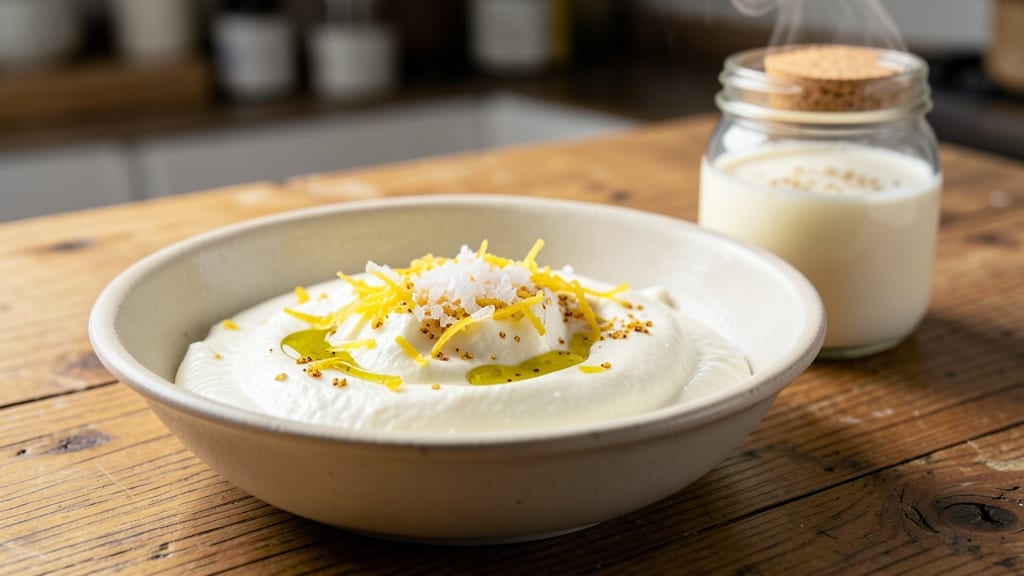
This almond milk ricotta cheese recipe transforms humble pantry staples into a creamy, plant-based spread that mimics traditional ricotta perfectly. 🌱 The secret lies in blending soaked almonds with almond milk, nutritional yeast, and a touch of lemon juice—no curdling, no gummy texture, just velvety smoothness that holds its shape.
I developed this recipe after years of struggling to find a vegan ricotta that could stand up to lasagna layers or pasta dishes without falling apart.
The process is surprisingly simple: soak almonds overnight for maximum creaminess, then blend with warm almond milk and a pinch of salt to create a base that's naturally rich and slightly nutty. The nutritional yeast adds that signature cheesy depth, while lemon juice brightens the flavor and prevents any bitterness.
What sets this apart is how well it performs in cooking—it browns beautifully when baked, holds together in lasagna, and even works as a filling for stuffed shells.
What you'll end up with is a versatile ricotta that works in both sweet and savory applications. Use it as a spread on toast, fold into pasta dishes, or layer in vegan lasagna where it melts just enough to create that signature creamy texture.
The texture is firm enough to pipe into cheesecake or cannoli shells, yet soft enough to blend seamlessly into sauces. It's the kind of plant-based ingredient that makes traditional recipes feel accessible without compromise.
Best of all, this recipe comes together in under 10 minutes of active time (plus overnight soaking), making it perfect for meal prep. The ingredients are budget-friendly, and the flavor profile is clean yet complex—no aftertaste, no artificial ingredients.
Whether you're vegan, lactose intolerant, or simply looking to reduce dairy, this almond milk ricotta delivers restaurant-quality results at home.
Ingredients for almond milk ricotta cheese
Pantry staples meet plant-based innovation for this velvety ricotta substitute.
| Ingredient | Amount | Notes |
|---|---|---|
| Raw Almonds 🌰 | 1 cup | Unsalted, whole or slivered |
| Unsweetened Almond Milk 🥛 | 1 cup | Warm, unsweetened variety |
| Nutritional Yeast 🍄 | ⅓ cup | Fortified, for cheesy flavor |
| Fresh Lemon Juice 🍋 | 1 tbsp | Freshly squeezed, bright |
| Sea Salt 🧂 | ½ tsp | Fine grain preferred |
| White Vinegar 🍶 | 1 tsp | For acidity balance |
| Ground Flaxseed 🌾 | 1 tbsp | Mixed with 3 tbsp water |
| Extra-Virgin Olive Oil 🫒 | 1 tbsp | For richness and binding |
| Pure Maple Syrup 🍁 | 1 tsp | Optional, for subtle sweetness |
| Water 💧 | 3 tbsp | For flaxseed mixture |
| Black Pepper 🌶️ | ¼ tsp | Freshly ground |
The almonds are the foundation—raw, unsalted for maximum creaminess after soaking. Trader Joe's or bulk bins at natural food stores offer the best prices for whole almonds. Soak them overnight in water (or up to 4 hours in warm water) to ensure they blend smoothly. Nutritional yeast is non-negotiable here; Bragg or Bob's Red Mill brands deliver consistent cheesy flavor. For the almond milk, avoid sweetened varieties—the added sugar can throw off the delicate balance. Warm it slightly before blending to help emulsify the mixture.
No almond milk? Cashew milk or oat milk work in a pinch, though texture may vary slightly. Substituting flaxseed? Chia seeds at the same ratio (1 tbsp chia + 3 tbsp water) function as a binder. The lemon juice is critical—it prevents bitterness and mimics the tang of traditional ricotta. If you're sensitive to acidity, reduce to 0.5 tbsp, but don't skip it entirely. For extra richness, add 1 tbsp of silken tofu to the blend. The maple syrup is optional but enhances the spreadability; agave works too if you prefer.
Store leftovers in an airtight container lined with parchment paper to prevent sticking. Keeps for 5-6 days in the fridge, though texture may firm up slightly. For longer storage, portion into ice cube trays, freeze, then transfer to a bag—perfect for lasagna layers or quick spreads. If the ricotta separates after blending, simply re-blend with 1 tbsp of warm water. This recipe doubles easily, so make a batch and freeze extras for future pasta dishes or desserts.
Why You'll Love This Recipe
- Five-Ingredient Magic: I swear by this—just raw almonds, almond milk, nutritional yeast, lemon juice, and salt. That’s it. No fancy equipment, no waiting for cultures, no measuring cups that make you question your life choices.
- Bright & Tangy Twist: The lemon juice cuts through the richness like a zesty wake-up call, while the nutritional yeast adds that unmistakable cheesy depth. It’s creamy but never heavy, with a brightness that makes it feel fresh, not processed.
- Breakfast to Dessert: Spread it on toast for a protein-packed start, dollop it into overnight oats, or—here’s my guilty pleasure—swirl it into vanilla yogurt for a dessert that’s secretly healthy. It’s the kind of thing that makes you rethink what ricotta can do.
- Lasts All Week: Between us, I make a big batch on Sundays and it’s still perfect by Friday. Store it in the fridge, and it keeps its texture without turning rubbery. Plus, almonds are cheaper than dairy ricotta, so you’re saving money while eating better. Win-win.
Step-by-step instructions for almond milk ricotta cheese
Create a velvety plant-based ricotta with no curdling—just smooth texture and rich flavor.
👨🍳 Step 1: Soak and Blend the Almonds
Toast the 1 cup raw almonds in a dry skillet over medium heat for 3-4 minutes, stirring constantly until fragrant and lightly golden. Immediately transfer them to a bowl of warm unsweetened almond milk (about 1 cup). Let soak for 1 hour—this softens the almonds for silky blending.
After soaking, drain the almonds using a fine-mesh strainer, reserving the milk. Add the drained almonds to a high-speed blender with 3 tablespoons water and blend until completely smooth. The mixture should look like almond butter with no visible chunks. Scrape down the sides if needed—this ensures an even texture in your final ricotta.
🍳 Step 2: Prepare the Flaxseed Gel
In a small bowl, whisk together 1 tablespoon ground flaxseed and 3 tablespoons water. Let it sit for 5 minutes until it thickens into a gel-like consistency. This acts as a natural binder, replacing eggs in traditional ricotta recipes. The gel should resemble tapioca pudding—if it's too runny, add another ½ teaspoon flaxseed.
Meanwhile, heat the reserved almond milk in a saucepan over low heat until it reaches 160°F—just warm enough to kill any bacteria but not boil. This step prevents curdling later when you mix in acids. Keep it warm until you're ready to combine everything.
🥘 Step 3: Combine and Acidify
Add the blended almond mixture back to the blender along with the warm almond milk, 1 tablespoon fresh lemon juice, 1 teaspoon white vinegar, 0.33 cup nutritional yeast, 0.5 teaspoon sea salt, 1 tablespoon extra-virgin olive oil, 1 teaspoon pure maple syrup, and 0.25 teaspoon black pepper. Blend for 1-2 minutes until completely smooth and creamy.
Here's the key: the lemon juice and vinegar create acidity that mimics traditional ricotta's tang, but we're adding them gradually to prevent curdling. Pour the mixture into a clean bowl and stir in the flaxseed gel. The ricotta should thicken slightly as it sits—if it's too thin, let it rest for 10 minutes in the fridge to firm up.
⏰ Step 4: Rest and Serve
Transfer the ricotta to a storage container and refrigerate for at least 2 hours (or up to 3 days). This resting time allows the flavors to meld and the texture to set properly. When ready to serve, give it a final stir—it should be thick enough to hold its shape when spooned but still spreadable.
Use your almond milk ricotta on toast with fresh berries, layered in lasagna, or dolloped over pasta. The nutritional yeast adds a cheesy depth, while the flaxseed gel ensures it holds together beautifully. Store leftovers in an airtight container with a thin layer of water on top to preserve freshness.
Pro Tips For Making Almond Milk Ricotta Cheese
- Soak Almonds Overnight: I learned this the hard way—skipping the soak means your ricotta will taste bitter and gritty. Use 1 cup raw almonds with 2 cups water for 8–12 hours (yes, even if you’re impatient like me). The longer they soak, the creamier the result.
- Blend in Stages: Dump everything in the blender at once, and you’ll end up with a paste, not ricotta. First, blend soaked almonds with fresh water until smooth. Then, slowly add almond milk while blending—this keeps the texture light and spreadable.
- Strain Through Cheesecloth: A fine-mesh sieve leaves behind almond pulp, but cheesecloth catches every last drop of liquid gold. Line a bowl with it, pour in the blended mixture, and let it drain for 10–15 minutes. No cheesecloth? Use a clean kitchen towel—just squeeze gently.
- Acidify Before Salting: Add lemon juice before the nutritional yeast and salt—this balances the flavors better. Too much salt upfront? The ricotta will taste flat. Start with 1 teaspoon lemon juice, taste, then adjust yeast and salt to taste.
Storing and reheating this dish
Fridge Storage Tips
Store your almond milk ricotta in an airtight container lined with parchment paper to prevent sticking. The ricotta will keep fresh in the fridge for 5-6 days—though I recommend using it within 3 days for the best texture.
If it firms up slightly, simply stir it gently or let it sit at room temperature for 10 minutes before serving. The nutritional yeast and flaxseed gel help maintain its creamy consistency, but don’t be surprised if the edges set slightly firmer than the center. 🌱
Freezing for Later Use
For longer storage, portion the ricotta into ice cube trays or small airtight containers. Freeze for up to 3 months—this works perfectly for lasagna layers or quick spreads. When ready to use, thaw overnight in the fridge and stir gently.
If the texture becomes grainy after thawing, blend briefly with 1 tablespoon warm water to restore smoothness. I’ve found this method preserves the ricotta’s flavor and binding properties beautifully. ❄️
Reheating for Spreads
If you’re using the ricotta as a spread (like on toast or in dips), there’s no need to reheat it—just stir it gently to soften.
For dishes where you want it slightly warmed, like stuffed shells or pasta bakes, heat it in a saucepan over low heat for 2-3 minutes, stirring constantly. Avoid high heat, as it can cause separation.
A splash of warm almond milk can help restore creaminess if it thickens too much during reheating. 🔥
Reviving Separated Ricotta
If your ricotta separates after blending or reheating, don’t toss it! Simply blend it again with 1 tablespoon warm water or unsweetened almond milk until smooth. The flaxseed gel and olive oil help it recombine, so you’ll likely get back that velvety texture.
I’ve had this happen a few times, and it always works out—just don’t over-blend, or it may turn runny. The key is patience and a gentle touch. 💡
Preventing Curdling
The secret to avoiding curdling lies in the temperature and acid balance. Always use warm almond milk (160°F) when combining ingredients, and add acids (lemon juice and vinegar) gradually. If you’re nervous, mix the acids with a little water first to dilute them slightly.
Also, avoid overheating the ricotta—keep it at room temperature or below until ready to use. This method has never failed me, even with multiple batches. ✨
Meal Prep Strategies
Double the recipe and freeze half for future use—it’s perfect for meal prep! Store portions in small containers (like ramekins) for easy grab-and-go breakfasts or lasagna assembly. Label with the date to track freshness.
When prepping, let the ricotta rest in the fridge for 2 hours after blending to ensure it sets properly before storing. I often make a big batch on Sundays so I have it ready for quick weeknight meals. 📅
Nutrition facts
Frequently asked questions
Can I use raw almonds instead of toasted?
Raw almonds will work, but toasting them first enhances the flavor and prevents a bitter taste. If you skip toasting, soak the almonds for 4-6 hours instead of 1 hour to ensure they blend smoothly. The texture will still be creamy, but the flavor will be more subdued.
What if I don’t have nutritional yeast?
You can substitute with ½ teaspoon garlic powder + ½ teaspoon onion powder for a mild cheesy flavor, though it won’t be as rich. For a stronger umami taste, add 1 tablespoon miso paste (blended into the warm almond milk). The ricotta will still hold its shape but may lack depth.
Why did my ricotta turn out too thin?
Thin ricotta usually means one of two things: either the almonds weren’t blended long enough (aim for 1-2 minutes until completely smooth) or the flaxseed gel wasn’t thick enough. Let it rest in the fridge for 15-20 minutes—it will firm up as it cools. If it’s still too runny, blend in 1 tablespoon ground flaxseed (mixed with 1 tbsp water) until thickened.
Can I make this ricotta without a high-speed blender?
Yes, but you’ll need to soak the almonds for 8-12 hours (overnight) to ensure they break down completely. Use a regular blender and pulse frequently, scraping down the sides. The texture will be slightly grainier but still creamy. For extra smoothness, strain the blended mixture through a fine-mesh sieve.
How can I use this ricotta in desserts?
This ricotta works beautifully in vegan cheesecakes, cannoli fillings, or as a topping for fruit crumbles! For cheesecakes, mix it with 1 teaspoon vanilla extract and pipe into a crust. For cannoli, blend in ½ cup powdered sugar and chill until firm. It also pairs well with honey or maple syrup in pancakes or waffles.