
Desserts
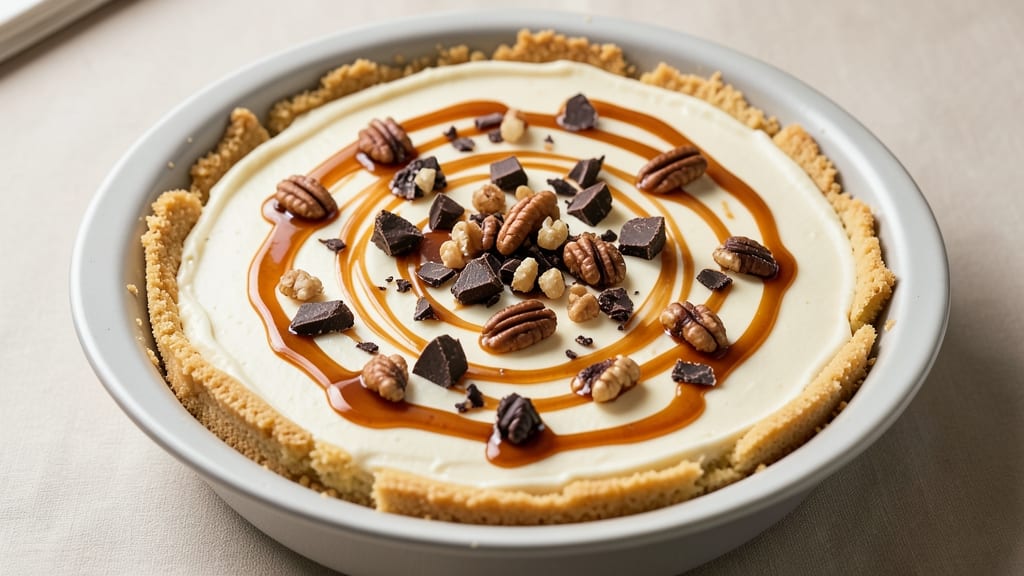
This Philadelphia cream cheese turtle cheesecake delivers the perfect balance of velvety cheesecake, gooey caramel, and rich chocolate ganache—all layered with crunchy pecans for texture. The secret lies in precise ingredient ratios and careful layering to ensure each component sets properly without cracking.
After years of perfecting this recipe, I’ve developed a foolproof method that guarantees a silky-smooth center and a caramelized top.
The process begins with a creamy cheesecake base that relies on room-temperature cream cheese and proper mixing to avoid lumps. A thin layer of homemade caramel follows, poured directly into the crust before baking for a perfectly set layer.
Once cooled, the cheesecake gets its signature chocolate ganache drizzle and a final sprinkle of toasted pecans for crunch. Every step is designed to create a dessert that’s restaurant-quality but achievable at home.
What makes this recipe stand out is the way the flavors and textures work together—soft cheesecake, warm caramel, and bittersweet chocolate ganache all complementing each other. The result is a dessert that’s rich yet balanced, with just the right amount of sweetness and crunch.
Whether you’re serving it at a holiday gathering or treating yourself to a special dessert, this recipe delivers every time.
With clear instructions for baking times, chilling periods, and plating, this recipe ensures success even for those new to cheesecake-making. The key is patience—letting the cheesecake set properly in the fridge before adding the final toppings. Once assembled, it’s a showstopper that will have everyone asking for seconds.
Ingredients for philadelphia cream cheese turtle cheesecake
Sixteen essential ingredients crafting a dessert that balances creamy cheesecake, rich caramel, and velvety ganache.
| Ingredient | Amount | Notes |
|---|---|---|
| Philadelphia Cream Cheese 🧀 | 16 oz | Room temperature, full-fat for best texture |
| Granulated Sugar 🍚 | 1 ½ cups | White or light brown preferred |
| All-Purpose Flour 🌾 | ½ cup | Sifted for smooth batter |
| Large Eggs 🥚 | 4 whole | Room temperature, separated |
| Sour Cream 🥛 | ½ cup | Full-fat for creaminess |
| Unsalted Butter 🧈 | ½ cup | Melted, room temperature |
| Vanilla Extract 🌿 | 2 tsp | Pure Madagascar bourbon preferred |
| Salt 🧂 | ¼ tsp | Diamond Crystal kosher preferred |
| Pecans 🥜 | 1 ½ cups | Chopped, toasted for crunch |
| Dark Chocolate Chips 🍫 | 1 cup | 70% cocoa, semi-sweet |
| Heavy Cream 🥛 | 1 cup | Cold, for ganache |
| Brown Sugar 🍚 | 1 cup | Packed, for caramel |
| Corn Syrup 🍯 | ½ cup | Light corn syrup preferred |
| Salted Butter 🧈 | ½ cup | Cubed, for caramel |
| Graham Cracker Crumbs 🍪 | 1 ½ cups | Fine, for crust |
| Melted Butter 🧈 | ¼ cup | For crust binding |
The Philadelphia cream cheese must be room temperature—this ensures a silky texture without lumps. Neufchatel works if unavailable, but the fat content is critical. For the crust, Honey Maid graham crackers yield the finest crumbs, though any sturdy graham will suffice. The brown sugar should be packed tightly for precise caramel measurements. If sour cream isn't available, Greek yogurt at equal volume maintains acidity balance. Every ingredient must be measured meticulously—this isn't a recipe for approximation.
Substitutions require precision. Dark chocolate can be swapped for bittersweet, but maintain 70% cocoa for proper ganache set. Pecans can be omitted if nut allergies are a concern, though texture suffers. For the caramel layer, maple syrup at 1:1 ratio works in a pinch, though it lacks the deep caramelization. The cream cheese must be full-fat—low-fat versions yield a crumbly texture. If vanilla extract is unavailable, vanilla bean paste at half the amount provides depth without overpowering.
Store the assembled cheesecake in an airtight container in the refrigerator for up to 5 days. The caramel layer will firm up but remains gooey when served warm. For longer storage, freeze individual slices wrapped in parchment for up to 3 months. Reheat caramel-topped slices at 350°F for 10 minutes to restore gooeyness. The ganache hardens over time—reheat gently to restore its velvety consistency.
Why You'll Love This Recipe
- No Mixer Needed: I’ll be real—this cheesecake only needs a whisk and a bowl. No fancy equipment, no waiting for a water bath to cool. Just cream cheese, sugar, and eggs blended until smooth, then folded into a buttery crust. My blender’s seen better days, but it handles this just fine.
- Turtle Twist Without Fuss: That caramelized pecan layer? It’s foolproof—just melted chocolate and caramel swirled into the cream cheese batter. No tempering, no stress. The sour cream keeps it silky, and the flour gives it that perfect, not-too-dense crumb. Honestly, it’s the kind of dessert that tastes like you slaved over it, even when you didn’t.
- Weeknight Dessert Hero: This is my go-to for when company drops by unannounced. Slice it, serve it, and no one will guess it took less than an hour to make. The crust? Five minutes in the food processor. The filling? Ten minutes of folding. Even my picky nephew (who hates cheesecake) asks for seconds.
- Leftovers That Don’t Suck: Most cheesecakes dry out or get rubbery. Not this one. The sour cream keeps it moist for days, and the cream cheese base means it reheats beautifully—just a quick zap in the microwave or warmed in the oven. I’ve had it for breakfast (yes, really) and it’s still rich, creamy, and worth every bite. Budget-friendly too—uses pantry staples and stretches for a crowd.
Step-by-step instructions for Philadelphia cream cheese turtle cheesecake
Layer by layer, this method delivers a perfectly balanced cheesecake with silky texture and caramel-rich depth.
Prepare the Graham Cracker Crust
Preheat your oven to 350°F. In a medium bowl, combine the 1.5 cups graham cracker crumbs with the 0.25 cup melted butter. Mix until evenly moistened and crumbly—this ensures the crust binds properly without becoming greasy. Press the mixture firmly and evenly into a 9-inch springform pan, creating an even base that reaches up the sides about ½ inch. Here's the thing—don't pack it too tightly or it will crack during baking.
Bake the crust for 10 minutes until it's just beginning to turn golden at the edges. Remove from the oven and let it cool while you prepare the filling. This brief pre-bake prevents a soggy bottom layer. I like to place a small weight on the crust while it cools to maintain shape—just a cast-iron skillet works perfectly.
Mix the Cheesecake Filling
Reduce your oven temperature to 325°F and position a rack in the lower third. In a large mixing bowl, beat the 16 oz Philadelphia cream cheese and 1.5 cups granulated sugar together until completely smooth and creamy—this should take about 3-4 minutes with an electric mixer. The mixture should be pale yellow and free of any lumps, which indicates proper emulsification.
Add the 4 whole large eggs one at a time, mixing just until each is incorporated after addition. This gradual incorporation prevents curdling. Stir in the 0.5 cup sour cream, 2 tsp vanilla extract, and 0.25 tsp salt until fully combined. The batter should be thick but pourable—if it's too stiff, you can gently fold in 1-2 tablespoons of the reserved crust drippings to adjust consistency. This step is where the magic happens: proper mixing ensures a silky, crack-free texture.
Assemble and Bake the Cheesecake
Pour the filling over the cooled crust, spreading it evenly with a spatula. Tap the pan gently on the counter 3-4 times to remove any air bubbles that may have formed. Place the springform pan in a large roasting pan and carefully pour hot water into the roasting pan until it reaches ½ inch up the sides of the springform pan. This water bath creates gentle, even heat distribution.
Bake for 50-55 minutes until the edges are set but the center still has a slight quiver when gently shaken. The cheesecake should be just barely set—it will continue cooking during the cooling process. Here's what I do: I insert a toothpick after 45 minutes—if it comes out with a few moist crumbs but no liquid, it's ready. If it's too wet, return it to the oven for 5 more minutes. Overbaking is the enemy of that perfect creamy texture.
Prepare the Caramel and Chocolate Layers
While the cheesecake bakes, prepare the caramel topping. In a medium saucepan, combine the 1 cup brown sugar, 0.5 cup corn syrup, and 0.5 cup salted butter. Bring to a boil over medium-high heat, then reduce to medium-low and simmer for 8-10 minutes until the mixture thickens to a soft-ball stage (about 235°F on a candy thermometer). Remove from heat and stir in the 1.5 cups chopped pecans until evenly coated.
For the chocolate layer, melt the 1 cup heavy cream in a small saucepan over medium heat until steaming. Immediately pour it over the 1 cup dark chocolate chips in a heatproof bowl. Let it sit for 2 minutes, then stir until completely smooth. This creates a glossy, velvety ganache that will complement the caramel perfectly. Both mixtures should be ready to use once the cheesecake has cooled completely.
Layer and Chill to Perfection
Remove the cheesecake from the water bath and let it cool at room temperature for 1 hour. Then refrigerate it uncovered for at least 4 hours or overnight—this gradual cooling prevents cracking. Once completely chilled, spread the caramel mixture evenly over the cheesecake, using a spatula to create decorative swirls. Immediately pour the chocolate ganache over the caramel and spread it to cover completely.
Return the cheesecake to the refrigerator for 2 more hours to allow the layers to fully set. This final chilling ensures clean slices with no melting between layers. To serve, run a knife around the edge of the pan and release the springform. Slice with a warm knife for clean, perfect portions. Each bite should deliver that signature combination of creamy cheesecake, rich caramel, and nutty crunch—all balanced perfectly.
Pro Tips For Making Philadelphia Cream Cheese Turtle Cheesecake
- Whip Cream Cheese Cold: Take your block of Philadelphia cream cheese straight from the fridge—no thawing, no room temp nonsense. Cold cream cheese whips faster and smoother, and it won’t turn into butter when you add the sugar. I used to rush this, and the batter always looked grainy. Now I just let it sit in the bowl while I mix the other ingredients.
- Sift the Flour Twice: Cream cheese batters are finicky, and lumps are the enemy. Sift the all-purpose flour into the wet ingredients, then sift it again right before folding in the eggs. This keeps the texture silky, especially if you’re using a hand mixer instead of beating by hand. Yes, it’s extra work, but the result is worth it—no dense, cakey spots.
- Don’t Overmix the Batter: Once the eggs are fully incorporated, stop mixing the second the batter looks smooth. Overmixing adds air that’ll collapse in the oven, leaving you with a dense, flat cheesecake. I learned this after my first batch turned out like a sad brick. Two minutes max after the eggs go in—set a timer if you’re distracted.
- Chill the Batter Longer: Let the batter rest in the fridge for at least 2 hours, or overnight if you can. This isn’t just about convenience—it lets the flour absorb moisture and the cream cheese relax, so it doesn’t crack as it bakes. I skipped this once and ended up with a cheesecake that looked like a map of tectonic plates. Not ideal.
Storing and reheating your leftovers
Refrigerator Storage
Store your assembled cheesecake in an airtight container or wrapped tightly with plastic wrap directly on the cheesecake surface to prevent drying. The caramel layer will firm up but remains gooey when served warm.
Keep it refrigerated at 40°F or below for up to 5 days. The flavors actually deepen over time as the layers meld together—this is when the cheesecake reaches its peak texture. 💫
Freezer Storage
For longer storage, freeze individual slices wrapped in parchment paper and placed in a freezer bag. This method prevents freezer burn and maintains layer separation. Store for up to 3 months at 0°F or below.
When ready to serve, thaw overnight in the refrigerator to preserve texture. For a quick treat, microwave a single slice at 50% power for 20-30 seconds to restore the caramel's gooeyness. ❄️
Reheating Caramel Layers
If your cheesecake sits too long and the caramel hardens, reheat slices at 350°F for 10-12 minutes until the caramel softens. Place the slice on a baking sheet and cover loosely with foil to prevent over-browning.
The ganache will also soften slightly, restoring that velvety contrast. For a restaurant-style finish, drizzle extra warm caramel over reheated slices before serving. 🔥
Ganache Restoration
The chocolate ganache hardens over time in the fridge. To restore its silky texture, place the cheesecake on a wire rack over a pot of simmering water for 2-3 minutes. The gentle steam softens the ganache without melting the cheesecake layer.
For individual slices, microwave at 50% power for 10 seconds, then let sit for 30 seconds to redistribute the heat evenly. 💡
Crust Refresh
If the graham cracker crust loses its crispness after storage, revive it by broiling the cheesecake for 1-2 minutes at 375°F. Watch closely to prevent burning the caramel layer.
This quick step restores the crust's texture while keeping the filling cool. For extra crunch, sprinkle toasted pecans over the warm caramel before serving. 🥜
Serving Temperature
Serve this cheesecake chilled for the best texture contrast—cool cheesecake, warm caramel, and room-temperature ganache. If you've reheated slices, let them sit at room temperature for 5-10 minutes before serving to allow the layers to stabilize.
The ideal serving temperature is 55-60°F, where each component shines without melting prematurely. 🍽️
Nutrition facts
Frequently asked questions
Why does my Philadelphia cream cheese cheesecake crack?
Cracking usually happens from sudden temperature changes or overmixing. Let the cheesecake cool gradually at room temperature for 1 hour before refrigerating, and avoid opening the oven door too often while baking. Also, beat the cream cheese and sugar until completely smooth but not overmixed—this prevents air bubbles that cause cracks.
Can I make this cheesecake without a water bath?
Yes, but the texture may be less consistent. A water bath creates gentle, even heat that prevents cracking and ensures a perfectly set center. If you skip it, bake at 300°F instead of 325°F and check frequently—remove the cheesecake as soon as the edges are set but the center still jiggles slightly.
How do I fix a cheesecake that didn't set properly?
If the center is still too soft, return it to the oven at 300°F for 5-10 minutes to finish setting. For a runny filling, chill uncovered for 4-6 hours to firm up. If it's underbaked but not runny, spread a thin layer of chocolate ganache on top and refrigerate for 2 hours—this helps stabilize the texture.
Can I substitute Neufchatel for Philadelphia cream cheese?
Neufchatel works in a pinch, but Philadelphia has a higher fat content (34% vs. 20%) which gives it that signature richness. If using Neufchatel, add 2 tablespoons extra heavy cream to compensate. For the best texture, stick with full-fat Philadelphia—low-fat versions yield a crumbly result.
How do I get the caramel layer to stay gooey when serving?
Store the cheesecake in the fridge for no longer than 5 days—the caramel hardens after that. For reheating, place slices on a baking sheet and warm at 350°F for 10-12 minutes until the caramel softens. Alternatively, drizzle with warm caramel right before serving. The key is timing—serve it within 24 hours of assembly for peak texture.