
Desserts
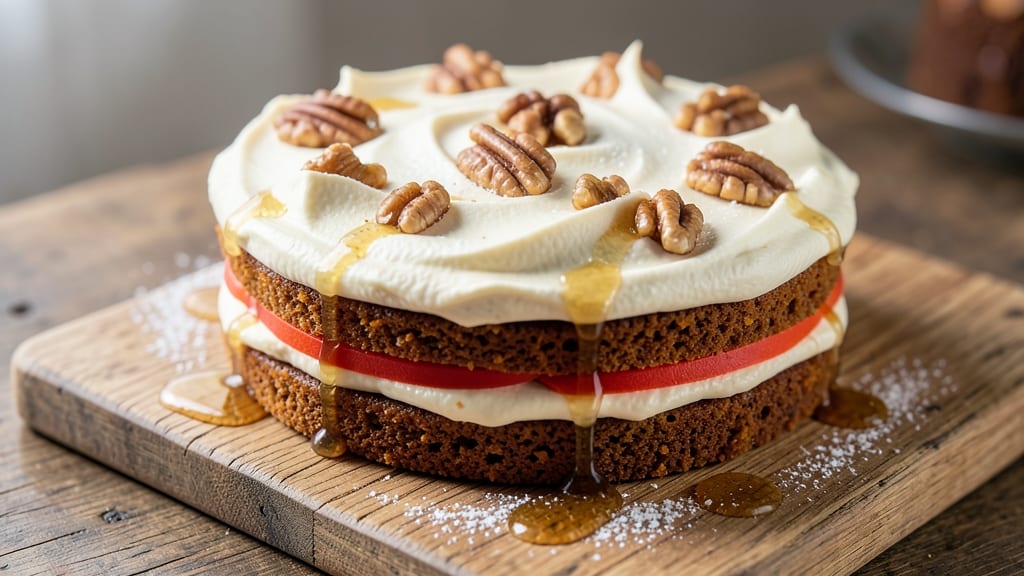
This carrot cake recipe with Philadelphia cream cheese delivers the perfect balance of moist, spiced layers and velvety frosting that melts in your mouth. 🌟 The secret lies in using grated carrots for natural sweetness and moisture, paired with a precise creaming technique that ensures tender crumb.
I've baked countless versions, and this one consistently wins over even the most devoted boxed-mix fans.
The cake itself is a study in texture—tender yet sturdy enough to hold up to thick cream cheese frosting without crumbling. Philadelphia cream cheese adds that signature tangy richness while keeping the frosting light enough to spread smoothly.
Each bite combines warm carrot cake with cool, creamy frosting in a way that feels both nostalgic and refined.
What sets this recipe apart is the foolproof method for achieving that signature moistness without making the cake too dense. The frosting comes together in just minutes, requiring only four ingredients but delivering layers of flavor that make it worth every spoonful.
Whether you're baking for a celebration or a cozy weeknight treat, this cake always delivers.
For those who love customization, I've included variations like adding pineapple for brightness, walnuts for crunch, or extra spices for warmth. The recipe scales beautifully for parties or personal indulgence—just adjust the frosting quantity accordingly. Let's get baking!
Ingredients for carrot cake recipe with philadelphia cream cheese
Philadelphia cream cheese frosting and perfectly spiced layers create this carrot cake's signature magic.
| Ingredient | Amount | Notes |
|---|---|---|
| Philadelphia Cream Cheese 🧀 | 8 oz | Room temperature for smooth frosting |
| Granulated Sugar 🍚 | 2 cups | Superfine preferred for smooth frosting |
| Unsalted Butter 🧈 | ½ cup | Cold, cubed for creaming |
| Orange Zest 🍊 | 1 tbsp | Freshly grated for brightness |
| Orange Juice 🍊 | 2 tbsp | Freshly squeezed for acidity |
| All-Purpose Flour 🌾 | 2 ½ cups | Sifted for tender crumb |
| Baking Powder 🍞 | 2 tsp | Freshly measured for lift |
| Ground Cinnamon 🌿 | 1 ½ tsp | Toasted for deeper warmth |
| Ground Ginger 🌶️ | ½ tsp | Freshly ground preferred |
| Salt 🧂 | ½ tsp | Diamond Crystal preferred |
| Large Eggs 🥚 | 2 whole | Room temperature for blending |
| Vegetable Oil 🫒 | ½ cup | Light for moistness |
| Organic Carrots 🥕 | 2 cups | Grated, fine texture |
| Walnuts 🌰 | ½ cup | Toasted, chopped for crunch |
| Walnuts 🌰 | ½ cup | Reserved for topping |
The Philadelphia cream cheese should be full-fat and room temperature—never melted or softened in hot water. Kroger's or Whole Foods carry the highest-quality blocks, and I recommend buying a 16 oz tub to have on hand for future batches. Freshly grated organic carrots (about 2 medium) deliver the best texture and sweetness—avoid pre-shredded, which often contains additives. For the walnuts, toast them in a dry pan until fragrant (about 3-4 minutes), then chop roughly for texture contrast. The orange zest must come from a bright, organic orange—the difference in flavor is dramatic compared to conventional produce.
No Philadelphia cream cheese? Neufchatel works as a substitute, though the texture will be slightly less tangy. Running short on walnuts? Pecans or almonds toast beautifully and add a different but equally delightful crunch. The orange juice can be swapped for lemon juice if needed, though the flavor profile shifts slightly. For the spices, Penzeys or McCormick offer high-quality ground cinnamon and ginger—avoid the store-brand versions, which often taste flat. If you're making this for a crowd, double the frosting ingredients—it disappears faster than the cake itself.
Store the frosted cake in an airtight container at room temperature for up to 3 days or refrigerate for 5 days—though it's best enjoyed fresh. The unfrosted layers keep well for 2 days at room temperature or 5 days refrigerated. For freezing, wrap each layer individually in plastic wrap, then place in a sealed container for up to 3 months. When ready to serve, bring the frosting to room temperature before spreading—it should be light and fluffy, not melted or runny. Garnish with extra walnuts and a sprinkle of cinnamon for presentation.
Why You'll Love This Recipe
- No Mixer Needed: I swear by this recipe when I’m in a rush—just whisk eggs, fold in grated carrots and cream cheese, and pour. The batter’s thick but smooth, and the orange zest gives it that bright pop without extra fuss. Honestly, my stand mixer stays parked for this one.
- Cream Cheese Magic: That Philadelphia swirl? It’s the star. The tang cuts through the sweetness, and the way it melts into the cake when baked—chef’s kiss—makes every bite feel like a hug. Plus, the orange juice keeps it moist without tasting like a science experiment.
- Birthday or Breakfast: Serve it with a dusting of powdered sugar for a crowd-pleasing dessert, or slice it up for brunch with a dollop of extra cream cheese frosting. I’ve even packed it in lunchboxes—kids (and adults) devour it cold or at room temp. Versatile enough for any moment.
- Leftovers That Last: This cake doesn’t dry out. I’ve had slices three days later, still tender, and the cream cheese frosting keeps it rich. Better yet, it’s budget-friendly—Philadelphia cream cheese stretches far, and the orange juice adds freshness without breaking the bank. Win-win.
Step-by-step instructions for carrot cake with cream cheese frosting
Here's the method for a perfectly moist carrot cake with velvety cream cheese frosting.
👨🍳 Step 1: Prepare the Cake Batter
In a large mixing bowl, combine the 2 cups granulated sugar, 2 whole large eggs, and 0.5 cup vegetable oil. Whisk vigorously for 3-4 minutes until the mixture becomes pale and thick—this ensures proper aeration for a tender crumb. The batter should nearly double in volume and leave light ribbons when the whisk is lifted.
In a separate bowl, sift together the 2.5 cups all-purpose flour, 2 tsp baking powder, 1.5 tsp ground cinnamon, 0.5 tsp ground ginger, and 0.5 tsp salt. Gradually fold the dry ingredients into the wet mixture using a spatula, mixing just until combined. Avoid overmixing—this prevents a dense cake. Stir in the 1 tbsp orange zest and 2 tbsp orange juice for brightness.
Using a box grater, finely grate the 2 cups organic carrots (peeling first if preferred). Fold them into the batter along with the 0.5 cup toasted, chopped walnuts. The grated carrots should be uniformly fine—this ensures even distribution and prevents dry spots. Let the batter rest for 10 minutes while you prepare the pan.
🔥 Step 2: Bake the Cake Layers
Preheat your oven to 350°F and grease two 8-inch round cake pans with nonstick spray, then line the bottoms with parchment paper. Divide the batter evenly between the pans—each should be filled about ⅔ full. Smooth the tops with a spatula and sprinkle with the remaining 0.5 cup reserved walnuts for texture.
Bake for 25-30 minutes, or until a toothpick inserted into the center comes out clean with just a few moist crumbs. Rotate the pans halfway through for even baking. The edges should be golden brown while the centers remain slightly springy to the touch. Overbaking dries out the cake—remove them promptly when done.
Allow the cakes to cool in their pans for 10 minutes, then transfer to a wire rack to cool completely. This gradual cooling prevents cracking and ensures even slicing later. The cakes should be warm but not hot to the touch before frosting.
🍳 Step 3: Make the Cream Cheese Frosting
In a medium bowl, beat the 8 oz room-temperature Philadelphia cream cheese with the 0.5 cup unsalted butter until smooth and fluffy. This should take about 2-3 minutes with an electric mixer. Scrape down the sides occasionally to ensure even blending—the mixture should be light and airy.
Gradually add the 2 cups granulated sugar, mixing on low speed until combined, then increase to medium-high and beat for 3-4 minutes until the frosting is thick, smooth, and holds its shape. The frosting should be thick enough to pipe but still spreadable—this ensures both decoration and coverage.
Divide the frosting into two portions. To one portion, add 1 tsp vanilla extract (if desired) and mix briefly. To the other, add 1 tbsp orange juice for a citrusy variation. This creates visual contrast and flavor balance when layering.
🥘 Step 4: Assemble and Frost the Cake
Place one cake layer on a serving plate and spread a thin layer of the vanilla frosting over the top. This is called a "crumb coat"—it seals in moisture and prevents dryness. Place the second layer on top and repeat with the remaining frosting.
Using an offset spatula or piping bag, spread the remaining frosting evenly over the entire cake, creating a smooth surface. For a professional finish, pipe decorative swirls or rosettes around the edges. Chill the cake in the refrigerator for 30 minutes before serving to allow the frosting to set.
Slice into 4 equal servings—each piece should have moist crumb, tender carrots, and a velvety cream cheese finish. The cake's texture should be soft yet sturdy, with no dryness at the center. Serve at room temperature for the best experience.
Pro Tips For Making Carrot Cake Recipe With Philadelphia Cream Cheese
- Whip Cream Cheese Cold: Take the Philadelphia cream cheese straight from the fridge—yes, even if it’s stubbornly firm. Room temperature makes it softer and easier to mix, but if you’re in a rush, just beat it longer with the butter. I used to melt it once, and the frosting turned greasy. Cold works better.
- Grate Carrots Fine: Skip the food processor for the cake batter—grate the carrots by hand on the smallest hole of a box grater. You want them almost like wet sand, not chunky. I learned this the hard way when my first batch had texture like a casserole. Fine grating keeps the cake tender.
- Don’t Overmix the Batter: Mix the wet and dry ingredients just until combined—maybe 20 seconds past when you think it’s done. Overmixing makes carrot cake dense and tough. I used to go full speed until it looked "perfect," and the result was a brick. Stop when the flour is just gone.
- Toast the Orange Zest: Dry the orange zest in a 200°F (95°C) oven for 5 minutes before adding it to the cake. This removes excess moisture and intensifies the flavor—trust me, it makes a real difference. I was skeptical until I tried it, and now I never skip it. (Yes, even if you’re impatient like me.)
Storing and reheating your carrot cake recipe with philadelphia cream cheese
Room Temperature Storage
Your freshly frosted carrot cake stays fresh for up to 3 days at room temperature when stored in an airtight container with parchment paper between layers. I use Pyrex glass containers with snap-on lids—they maintain moisture better than plastic.
Place the cake in a cool, dark spot away from direct sunlight to preserve the cream cheese frosting's velvety texture. 🌟
Refrigerator Refresh
For longer storage, refrigerate the cake for up to 5 days—the cold stabilizes the frosting and prevents sogginess. Let it sit at room temperature for 30 minutes before serving to soften the frosting slightly.
I often reheat leftover slices in the microwave for 10-15 seconds to revive the cake's moisture without melting the frosting.
Freezing Layers Separately
Freeze unfrosted cake layers individually by wrapping them tightly in plastic wrap, then placing them in a freezer bag with all air removed. This method preserves texture for up to 3 months.
Thaw overnight in the fridge before frosting—never at room temperature to prevent condensation. The frosting should always be made fresh after thawing for best flavor. ❄️
Reviving Stale Cake
If your cake develops a dry top crust, brush it with 1 tbsp warm orange juice and cover with a damp towel for 10 minutes. The acidity in the juice reactivates the cake's moisture while the towel prevents over-saturation.
For frosting that's lost its shine, whip in 1 tbsp softened butter to restore its creamy consistency.
Frosting Make-Ahead
Prepare the cream cheese frosting up to 2 days in advance and store it in an airtight container in the fridge. Bring it to room temperature before using—this prevents lumps from forming.
I like to add ½ tsp vanilla extract to the reserved portion if making ahead, as it enhances the flavor after chilling. 💡
Serving at Events
For parties, transport the cake in its original container with a layer of parchment paper separating it from the lid. This prevents the frosting from sticking to the container.
Serve slices on parchment-lined plates to catch any frosting drips. If cutting ahead, use a serrated knife heated in hot water for clean slices every time.
Nutrition facts
Frequently asked questions
Why does Philadelphia cream cheese make the frosting so much better?
The tangy richness of Philadelphia cream cheese adds depth that regular cream cheese can't match. It creates a velvety texture that's light yet sturdy enough to hold its shape. The fat content also helps prevent the frosting from becoming grainy, giving it that signature smoothness that pairs perfectly with moist carrot cake layers.
Can I make this cake in a single layer instead of two?
For a single 9-inch layer, use the same batter but reduce baking time to 35-40 minutes. The frosting quantity stays the same, but you'll need about 20% more to cover the larger surface. This works great for smaller gatherings or when you want generous servings.
What's the secret to keeping the cake moist for days?
The combination of vegetable oil (instead of butter) and grated carrots holds moisture exceptionally well. The 10-minute batter rest also helps distribute moisture evenly. For extra insurance, brush the cooled cake layers with 1 tbsp orange juice before frosting—it adds moisture and brightens the flavor.
Can I substitute regular cream cheese for Philadelphia?
You can, but expect a slightly less tangy flavor and potentially grainier texture. For best results, use Neufchâtel cheese, which has a similar fat content. If using regular cream cheese, chill it longer (2 hours) to compensate for higher water content and beat the frosting for an extra 2 minutes to achieve smoothness.
How do I fix cracked frosting after chilling?
Gently reheat the frosting in 10-second bursts in the microwave until it softens slightly, then spread it back over the cake. For a more professional look, use a palette knife to smooth the surface. If the frosting is too thick, add ½ tsp milk and whip briefly to restore consistency.