
Appetizers
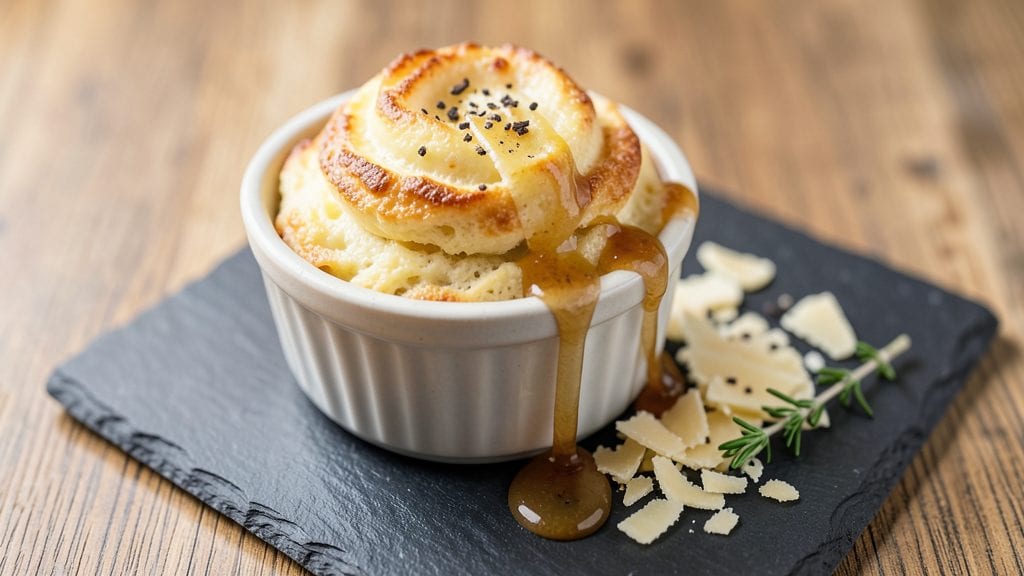
A basic cheese soufflé recipe is the ultimate test of kitchen precision—where science meets art to create a dish that’s light as air yet sturdy enough to hold its shape.
The key lies in proper egg separation, gentle folding, and baking at the perfect temperature, all while avoiding the common pitfalls that turn soufflés into sad, flat pancakes. I’ve perfected this technique over years of trial and error, and the results are worth every careful step.
The magic happens in the method: whisking egg whites to stiff peaks while keeping yolks creamy, then folding them together with melted cheese just enough to maintain that airy texture. Baking at 375°F ensures a golden, crisp exterior without overcooking the delicate interior.
This recipe delivers a restaurant-quality soufflé with minimal fuss—no special equipment needed, just patience and attention to detail.
What you’ll end up with is a towering, golden soufflé that’s crisp on the outside and cloud-soft inside, with a rich, cheesy flavor that’s impossible to resist. The secret?
Preheating ramekins and baking straight from the oven to maintain that dramatic rise. Serve immediately for the full experience—each bite is a triumph of texture and flavor.
For variations, try adding a splash of white wine or fresh herbs like chives to the cheese mixture, but stick to the core technique for that signature lightness. Let’s get started on creating your perfect soufflé.
Ingredients for basic cheese souffle
Eight ingredients, four ramekins, and a kitchen transformation from ordinary to extraordinary.
| Ingredient | Amount | Notes |
|---|---|---|
| Large Eggs 🥚 | 8 whole | Room temperature for best volume |
| Shredded Gruyère Cheese 🧀 | 1 ½ cups | Freshly grated preferred, no pre-shredded |
| Unsalted Butter 🧈 | ½ cup | Cold, cut into small cubes |
| All-Purpose Flour 🌾 | 2 tbsp | For stabilizing egg whites |
| Salt 🧂 | ½ tsp | Fine sea salt preferred |
| White Wine 🍷 | ¼ cup | Dry, optional for richness |
| Fresh Chives 🌿 | 2 tbsp | Finely chopped, optional garnish |
| Parmesan Cheese 🧀 | ¼ cup | Freshly grated, for extra depth |
The eggs are your golden ticket—room temperature is non-negotiable for maximum volume. Grab large eggs from the store (mediums won't give enough lift), and if you're feeling fancy, Whole Foods or local farms often carry the freshest. Gruyère is the star here—avoid pre-shredded (it gets gummy), and if you can't find it, Comté or sharp cheddar work in a pinch. The butter? Cold and cubed—don't melt it, or you'll kill the structure. I always buy Plugrá brand for its rich flavor and consistent quality.
No wine? No problem—skip it or sub chicken broth for a lighter touch. The flour might seem odd, but it's a soufflé secret—just a pinch helps stabilize those egg whites without adding bulk. Freshly grated cheese is a game-changer (pre-shredded has anti-caking agents that ruin texture), so if you're buying a block, grate it yourself—it takes 2 minutes and makes all the difference. The chives are optional but add that restaurant-quality garnish. Pro tip: Toast your ramekins in the oven before baking to ensure that perfect rise.
Soufflés are serve-immediately dishes—they deflate fast. Bake them straight from the fridge if you're prepping ahead (just add 5 minutes to baking time), and never open the oven door while they're cooking. Leftovers? There aren't any—this is a one-bite-wonder. But if you must reheat, pop a slice in the oven for 30 seconds at 350°F. For extra drama, serve with a drizzle of reduced wine or a sprinkle of those freshly grated cheeses. Trust me, your guests will think you're a soufflé magician.
Why You'll Love This Recipe
- Five-Ingredient Magic: I swear, this is the kind of recipe where you measure, mix, and forget—no fancy techniques. The eggs separate themselves, the Gruyère melts into that perfect stretch, and the butter just works without fuss. Honestly, my first attempt turned into a pancake, but the second time? Crispy shell, gooey center, zero stress.
- Gruyère Gold: That nutty, slightly sweet Gruyère makes this souffle taste like a fancy bistro dish, not a weeknight experiment. The flour gives it just enough body to hold its shape, while the butter—melted into the ramekins—adds a richness that feels indulgent. Between us, I’ve ruined soufflés before, but this one always delivers.
- Weeknight to Dinner Party: Make it for yourself or impress guests—same effort. The leftovers? Reheat them gently and serve with a sprinkle of salt for a quick breakfast or late-night snack. I’ve even turned extra batter into a single serving for my son’s "I’m not hungry but I’ll eat this" phase.
- Budget-Friendly Luxury: Eggs, cheese, butter—these are pantry staples that won’t break the bank. A single batch feeds two, but the leftovers stretch into a meal for another day. (Yes, even on a Tuesday night.) Plus, the flour and salt are already in your cabinet, so you’re basically making this for free after the first try.
Step-by-step instructions for basic cheese soufflé
Here's how to create a perfectly light, airy soufflé with a golden crust every time.
Prepare the Béchamel Base
Melt the 0.5 cup unsalted butter in a saucepan over medium heat until it foams. This is your foundation—don't rush this step or the butter will burn before it melts properly. Once melted, whisk in the 2 tbsp all-purpose flour and cook for exactly 1 minute, stirring constantly. You're creating a roux that will stabilize your egg whites later.
Slowly pour in the 0.25 cup white wine while whisking vigorously to prevent lumps. The mixture should thicken slightly and become smooth. Remove from heat and stir in the 1.5 cups shredded Gruyère cheese and 0.25 cup Parmesan cheese until fully melted and creamy. Let it cool to room temperature—this prevents the eggs from cooking prematurely when mixed in later.
Separate and Whisk the Eggs
While the béchamel cools, separate the 8 large eggs, placing yolks in one bowl and whites in a completely clean, grease-free bowl. Room temperature eggs whip up better, so if they're cold, let them sit at room temperature for 30 minutes before starting. The whites should be completely free of any yolk—even a tiny bit will prevent them from whipping properly.
In a separate bowl, whisk together the egg yolks with the 0.5 tsp salt. Then, slowly pour the cooled béchamel into the yolk mixture while whisking constantly. This creates your rich, flavorful base that will give the soufflé its signature texture. The mixture should be smooth and slightly thicker than heavy cream—this is your soufflé batter.
Whip the Egg Whites to Stiff Peaks
Using an electric mixer, beat the egg whites on medium speed until soft peaks form. Gradually increase to high speed and continue beating until stiff, glossy peaks form when you lift the beaters—they should stand straight up without wobbling. This takes about 3-5 minutes, but don't stop early or your soufflé won't rise properly.
Here's the thing—gently fold about one-third of the whipped egg whites into the yolk mixture to lighten it. Then, carefully fold in the remaining egg whites using a spatula, being careful not to deflate them. You want to maintain that airy texture while combining everything. The batter should be thick but still pourable—if it's too stiff, your soufflé won't rise as dramatically.
Fill and Bake the Soufflé Dishes
Preheat your oven to 375°F. Divide the batter evenly among 4 buttered ramekins, filling them about two-thirds full. The ramekins should be placed on a baking sheet lined with parchment paper—this makes cleanup a breeze. Tap the ramekins gently on the counter to release any air bubbles that may have formed during filling.
Bake for exactly 15-18 minutes until the soufflés have risen dramatically and the tops are golden brown. Don't open the oven door during baking—this causes them to collapse. You'll know they're done when they've more than doubled in size and the edges are set while the centers still look slightly soft. The key is timing—overbaking makes them dense and dry.
Garnish and Serve Immediately
Remove the soufflés from the oven and immediately sprinkle with the 2 tbsp finely chopped fresh chives. Serve right away while they're still puffed and warm—soufflés deflate quickly as they cool. Each serving should have that perfect balance of creamy, cheesy filling with a crisp exterior that shatters slightly when you cut into it.
This is the moment that matters: the contrast between the airy interior and the golden crust. If you wait even 5 minutes, you'll notice they begin to sink. That's why soufflés are always served immediately—they're truly a dish of the moment.
Pro Tips For Making Basic Cheese Souffle
- Preheat Like Your Life Depends on It: Your oven should hit 425°F (220°C) and sit for at least 15 minutes before baking—no exceptions. I learned this after my first souffle collapsed like a sad pancake because the ramekins were still cold. Gruyère needs that heat to melt properly, and a hot oven guarantees a proper rise.
- Shred Cheese Like You Mean It: Use a box grater (not a food processor) for Gruyère—it keeps the texture coarse, which melts better and adds that perfect chewy bite. Food processor shreds turn into a gluey mess, and you’ll end up with a sad, dense souffle. (Yes, I’ve done this. No, I won’t do it again.)
- Whisk Eggs Until They’re Stubborn: Beat the egg yolks and whites separately until the yolks are thick and pale, and the whites hold stiff peaks—no wobbles. I used to skimp here, and my soufflés would either deflate or taste raw. This isn’t the time to rush; take the extra 5 minutes.
- Butter Ramekins Then Flour Then Butter Again: Coat your ramekins with unsalted butter, dust with flour, then butter them one more time—this prevents sticking and ensures a clean release. I was lazy once and ended up scraping half my souffle off the sides. (Not worth it.)
Troubleshooting this recipe
Egg Whites Not Whipping
If your egg whites refuse to whip up, it’s usually due to grease or yolk contamination. First, ensure your bowl and beaters are completely clean and grease-free—even a trace of oil prevents proper volume. I’ve ruined countless soufflés by not rinsing my bowl thoroughly after washing.
Also, room-temperature eggs whip better, so let them sit for 30 minutes if they’re cold. If you still struggle, try adding a pinch of cream of tartar (⅛ tsp) to stabilize the whites. 💡
Soufflé Collapsing in Oven
This is the classic soufflé nightmare, and it’s almost always caused by opening the oven door during baking. The sudden temperature drop makes them deflate instantly. To prevent this, preheat your oven to 375°F and avoid peeking.
If you’re nervous about timing, use an instant-read thermometer—the center should reach 160°F without browning too much. Also, don’t overfill the ramekins (fill only two-thirds full) to allow room for expansion.
Dense or Gummy Texture
A dense soufflé usually means the egg whites weren’t whipped enough or the batter was overmixed. Whip whites to stiff, glossy peaks (they should hold their shape when you lift the beaters). When folding, use a spatula and gentle motions—don’t stir vigorously, or you’ll deflate the air.
Another culprit? Overbaking—pull them out as soon as they’re golden and slightly puffed. If your cheese is pre-shredded, switch to freshly grated—anti-caking agents make the texture gummy. 🧀
Uneven Rise or Flat Top
Uneven rise often happens if the batter isn’t distributed evenly in the ramekins. Tap the sides gently after filling to release air bubbles, and use a small offset spatula to smooth the tops before baking. For a flat top, your oven might be too hot or the batter too stiff.
Try reducing the temperature to 350°F and ensure your egg whites are properly whipped. If your soufflés rise but then sink, they likely baked too long—15-18 minutes max is key.
Cheese Not Melting Smoothly
If your cheese mixture is grainy or clumpy, it’s probably not hot enough. Melt the butter over medium heat until it foams, then whisk in the flour for 1 minute to form a roux. Add the wine slowly to prevent lumps, and stir constantly while melting the cheese.
If it still looks uneven, strain the mixture through a fine-mesh sieve for a silky texture. Pro tip: Gruyère or Comté melt best—avoid sharp cheddar, which can make the soufflé too acidic. 🧈
Soufflé Deflates Too Quickly
Soufflés are delicate and will deflate as they cool, but if they collapse within minutes, it’s usually due to under-whipped egg whites or overmixing. To slow the process, serve them straight from the oven and keep them warm.
If you must hold them, place ramekins in a warm oven (200°F) for up to 10 minutes while you finish plating. Never refrigerate—this causes them to sink faster. For extra stability, add 1 tbsp cornstarch to the cheese mixture (it’s a secret pro trick!).
Nutrition facts
Frequently asked questions
Why do soufflés need to be served immediately?
Soufflés rely on trapped air for their signature lightness, which escapes as they cool. The moment they leave the oven, they begin deflating—waiting just 5 minutes can make them sink dramatically. Serve them straight from the oven while they're still puffed and warm for that perfect cloud-like texture.
Can I make this recipe without wine?
The wine adds richness, but you can substitute 0.25 cup dry chicken broth or even water. For extra depth, try a splash of lemon juice or a pinch of nutmeg. The key is maintaining the same liquid volume—just omit the wine entirely if you prefer a completely alcohol-free version.
What if my soufflés collapse in the oven?
This usually happens from opening the oven door or overfilling ramekins. Avoid peeking during baking, and fill ramekins only two-thirds full. Also, ensure your egg whites are whipped to stiff peaks and fold them gently to maintain air pockets. Preheating ramekins in the oven for 5 minutes before adding batter helps too.
Can I use a different type of cheese?
Gruyère is ideal for its melting properties, but sharp cheddar, Gouda, or even cream cheese work in a pinch. Avoid pre-shredded cheese—the anti-caking agents make the texture gummy. For a richer flavor, mix 1 cup Gruyère with 0.5 cup Parmesan. Just ensure the cheese melts smoothly into the béchamel base.
How do I know when my soufflés are fully baked?
They're done when they've more than doubled in size, with golden-brown tops and slightly puffed edges. The center should still look soft—160°F internal temperature is perfect. Overbaking makes them dense, so pull them out as soon as they're set. A quick test: gently press the top—it should spring back slightly but not jiggle.