
Main Courses
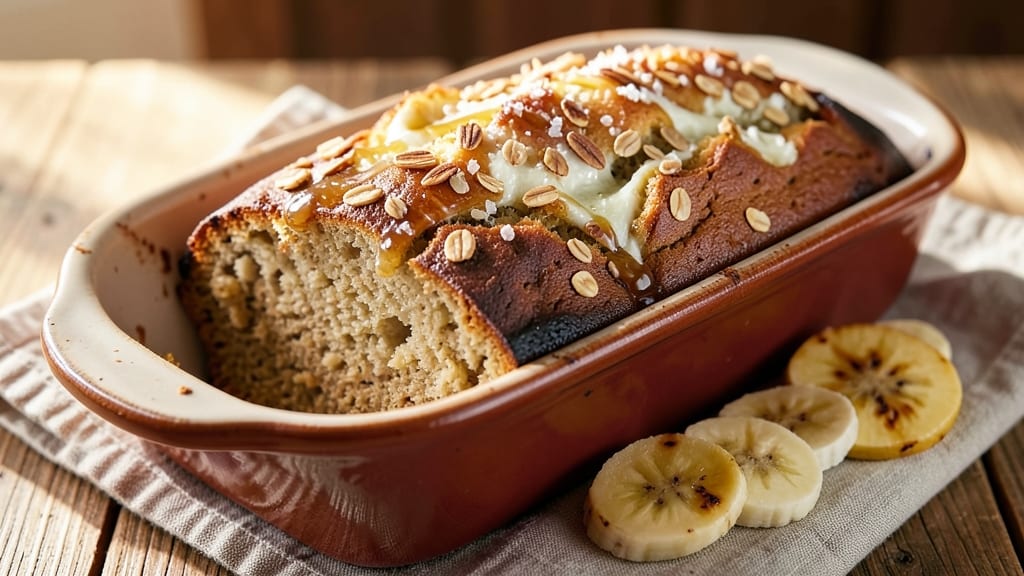
This banana bread recipe with cottage cheese and oats delivers the perfect balance of moist, tender crumb and creamy richness—no one will guess it's secretly packed with protein and fiber. 💛 I developed this version after discovering how cottage cheese transforms dense banana bread into something light yet satisfying, while oats add hearty texture without overpowering the classic flavor.
The secret lies in blending cottage cheese with ripe bananas and eggs to create a batter that's both moist and structurally sound.
Unlike traditional recipes, this version uses rolled oats for a subtle nuttiness that enhances each bite, while the cottage cheese keeps the crumb incredibly tender even days after baking. It's the kind of recipe that feels indulgent yet nourishing—ideal for breakfast, snacks, or dessert.
What you'll end up with is a loaf with a golden crust and a crumb so moist it practically melts in your mouth. The cottage cheese adds a subtle tang that balances the sweetness, while the oats give it a satisfying bite.
This recipe is vegetarian-friendly, budget-conscious, and perfect for using up overripe bananas.
Serve warm with a pat of butter or a drizzle of honey, or enjoy it cold with a cup of coffee. The flavor only improves with time, making it ideal for meal prep. Let's bake this banana bread!
Ingredients for banana bread recipe with cottage cheese and oats
Probably have most of this already—just add cottage cheese for that creamy twist.
| Ingredient | Amount | Notes |
|---|---|---|
| Ripe Bananas 🍌 | 3 medium | Mashed thoroughly, no brown spots |
| Large Eggs 🥚 | 2 whole | Room temperature for best mixing |
| Cottage Cheese 🧀 | 1 cup | Full-fat for creaminess, blended smooth |
| Rolled Oats 🌾 | 1 cup | Old-fashioned, not quick oats |
| All-Purpose Flour 🌾 | 1 ½ cups | Sifted for light texture |
| Granulated Sugar 🍚 | 1 cup | White or brown, packed lightly |
| Brown Sugar 🍚 | ½ cup | Packed firmly for moisture |
| Unsalted Butter 🧈 | ½ cup | Melted, cooled slightly |
| Vanilla Extract 🌸 | 1 tbsp | Pure extract, not imitation |
| Baking Soda 🧂 | 1 tsp | Freshly opened for lift |
| Salt 🧂 | ½ tsp | Fine sea salt preferred |
| Ground Cinnamon 🌿 | 1 tsp | Freshly ground for warmth |
| Honey 🍯 | 2 tbsp | For drizzling, optional |
The cottage cheese is non-negotiable here—it's what keeps this bread moist for days. Full-fat is worth the splurge (trust me, the texture is next-level), and I always grab the large curd variety from Trader Joe's or the store brand at Kroger. Blend it smooth before mixing, or you'll get little lumpy surprises. Ripe bananas are key too—those with brown spots pack the most sugar. I usually grab 3-4 slightly overripe ones from the back of the bunch at Whole Foods—they're perfect for this.
No cottage cheese? Greek yogurt works in a pinch, but it'll be slightly tangier. Running low on oats? Substitute quick oats (they'll be finer, but still add texture). The butter can be swapped for vegetable oil if you're avoiding dairy, but the flavor won't be quite the same. For the sugars, I like to mix white and brown for balance—white gives sweetness, brown adds moisture. If you're watching sugar, reduce to 0.75 cup total and add an extra splash of vanilla. The honey drizzle at the end is totally optional but makes it feel extra special.
This keeps beautifully for 5 days wrapped in foil at room temp, or 1 week in the fridge. Freeze slices for up to 3 months—they're perfect for quick toast in the morning. I always bake two loaves (double the recipe) because it disappears fast. Store one for the week, freeze the other. The flavor actually improves after a day or two—something about the cottage cheese mellows out the tang over time. Toasting with butter? Absolute game-changer.
Why You'll Love This Recipe
- No Mash Needed: I swear by this trick—just toss those overripe bananas into the food processor with the cottage cheese and oats, pulse until smooth. No sticky fingers, no extra bowls, and honestly? It’s the reason I stopped stressing over banana bread prep.
- Creamy Texture Magic: That cottage cheese isn’t just an egg substitute—it keeps the crumb unreal. Moist but not dense, with a subtle tang that balances the sweetness. My husband still asks why I don’t make this every week.
- Breakfast or Snack: Slice it warm with peanut butter for a grab-and-go breakfast or pack it for lunch. (Yes, even on a Tuesday night.) The oats add a satisfying chew, so it’s never just dessert—it’s a meal.
- Pantry-Friendly Savings: Flour, oats, and eggs are staples, and cottage cheese stretches further than you’d think. I’ve made three loaves from one batch of bananas—perfect for feeding the family without breaking the bank.
Step-by-step instructions for banana bread with cottage cheese and oats
Here's how to make the ultimate moist banana bread—creamy cottage cheese keeps it tender while oats add texture.
👨🍳 Step 1: Prep Ingredients for Perfect Texture
Start by mashing the 3 medium ripe bananas with a fork until completely smooth—no lumps allowed. I press them through a fine-mesh sieve to remove any skins for extra smoothness. In a separate bowl, blend the 1 cup cottage cheese until completely smooth, no chunks. This ensures your bread stays creamy, not grainy.
Whisk together the 2 whole large eggs and 1 tbsp vanilla extract in a medium bowl until fully combined. In another bowl, mix the 1 cup granulated sugar and 0.5 cup brown sugar with the 0.5 cup melted butter (cooled slightly) until smooth. This sugar-butter combo creates that signature moist crumb we're after.
🍳 Step 2: Combine Wet and Dry Ingredients
In a large mixing bowl, combine the mashed bananas, blended cottage cheese, egg mixture, and sugar-butter mixture. Stir until everything is well incorporated—this is where the magic happens. The cottage cheese adds moisture while the bananas provide natural sweetness.
In a separate bowl, whisk together the 1.5 cups all-purpose flour, 1 tsp baking soda, 0.5 tsp salt, and 1 tsp ground cinnamon. Sift the flour mixture into the wet ingredients and gently fold together until just combined. Be careful not to overmix—this keeps the crumb light and tender. The oats go in last, and I like to fold them in by hand to distribute them evenly.
🥘 Step 3: Prepare the Pan and Bake
Preheat your oven to 350°F. Grease an 8x4-inch loaf pan thoroughly with butter or line it with parchment paper for easy removal. Pour the batter into the prepared pan and smooth the top with a spatula. Tap the pan gently on the counter to remove any air bubbles.
Bake for 50-60 minutes until a toothpick inserted in the center comes out clean. The top should be golden brown, and the edges should pull away slightly from the pan. If the top browns too quickly, tent loosely with foil after 30 minutes to prevent over-browning while keeping the center moist.
⏰ Step 4: Cool and Finish
Remove the banana bread from the oven and let it cool in the pan for 10 minutes. This resting period prevents cracking when you transfer it to a wire rack. While it's cooling, drizzle the top with 2 tbsp honey for extra moisture and a subtle sweetness. The honey adds a beautiful glossy finish and enhances the caramel notes.
Once cooled completely, slice and serve. Each bite should be moist, slightly dense from the cottage cheese, and studded with chewy oat bits. Store leftovers wrapped at room temperature for up to 3 days, or freeze for longer storage—this bread actually tastes better the next day as the flavors meld.
Pro Tips For Making Banana Bread Recipe With Cottage Cheese And Oats
- Mash Bananas First: I learned this the hard way—mashing the bananas before mixing anything else saves you from a sticky, gloppy mess later. The cottage cheese will thicken things up, but start with smooth, lump-free banana puree, and your batter will be far easier to handle.
- Strain the Cottage Cheese: Skip the grainy texture by pressing cottage cheese through a fine-mesh sieve before adding it to the batter. The oats already add chewiness, so you don’t need cottage cheese chunks ruining the texture—this step makes a real difference.
- Preheat Pan and Grease Well: This isn’t just about preventing sticking—it’s about even baking. A hot pan (425°F/220°C) and a generous brush of oil or melted butter helps the bread rise straight and browns the oats nicely. I used to rush this, and my loaves always came out uneven.
- Add Oats Last: Fold in the rolled oats after mixing wet and dry ingredients to keep them from absorbing too much moisture before baking. This ensures they stay crisp on the outside while the bread stays tender inside—my grandmother swore by this, and she was right.
Common mistakes when making this dish
Overmixing the Batter
I can't stress this enough—overmixing is the number one culprit behind dense, tough banana bread. When you mix the wet and dry ingredients together, stop as soon as they're just combined. The cottage cheese and oats need to stay distinct, not get fully incorporated into a homogeneous dough.
I see people whip this batter for 2-3 minutes after the flour disappears, and that's when the gluten develops too much, making the crumb tough. Fold the oats in by hand at the very end to keep those chewy bits intact. 🍞
Skipping the Cottage Cheese Blend
Here's where beginners mess up: not blending the cottage cheese smooth before mixing. Those little curds turn into lumpy surprises in your bread. I grab a hand blender or immersion blender and puree the cottage cheese until it's completely smooth—no visible texture.
If you skip this step, you'll end up with dry pockets where the curds didn't break down. Pro tip: Use full-fat cottage cheese—it's worth the extra cost for that creamy texture that keeps the bread moist for days.
Using Underripe Bananas
This is a classic mistake that throws off the whole recipe. Underripe bananas lack the natural sweetness and moisture that balance the cottage cheese's tang. Look for bananas with brown spots—those are packed with sugar and will give your bread that perfect caramelized flavor.
I usually grab 3-4 slightly overripe ones from the back of the bunch at the store. If you're in a pinch, mash them extra well and add 1 extra tablespoon of honey to compensate for the lack of sweetness.
Incorrect Oven Temperature
Baking at the wrong temperature is a surefire way to ruin this bread. Too hot (like 375°F) causes the outside to brown too quickly while the center stays doughy. Too cool (like 325°F) means the bread won't rise properly and stays gummy.
Stick to 350°F—this is non-negotiable for getting that perfect golden crust with a tender crumb. If your oven runs hot, tent the loaf with foil after 30 minutes to prevent over-browning while the center finishes cooking.
Not Resting the Batter
Many recipes skip this crucial step, but letting the batter rest for 15-20 minutes before baking makes a world of difference. This allows the flour to fully hydrate and the cottage cheese to meld with the other ingredients, resulting in a more even crumb.
I usually mix everything, then let it sit while I preheat the oven. Don't rush it—this is what keeps your bread from cracking when it comes out of the pan. 💫
Overfilling the Pan
This is a common rookie mistake that leads to cracked tops or bread that doesn't rise properly. Fill your 8x4-inch loaf pan only 2/3 full—any more and the batter will overflow or create a dense, uneven loaf.
I use a kitchen scale to measure the batter and always leave room at the top. If you're worried about waste, bake two smaller loaves instead. The bread will rise more evenly, and you'll avoid that sad, sunken center that happens when pans are overfilled.
Nutrition facts
Frequently asked questions
Why does cottage cheese make banana bread moister?
The cottage cheese adds fat and protein that create a denser, creamier crumb while retaining moisture longer than traditional recipes. The full-fat version works best because it contains more fat to keep the bread tender for days. Think of it as a natural tenderizer that replaces some of the butter while adding a subtle tang.
Can I substitute Greek yogurt for cottage cheese?
Yes, but expect a slightly tangier flavor. Use 1 cup plain Greek yogurt (full-fat preferred) and reduce the butter by 2 tablespoons since yogurt contains some fat. The texture will be slightly lighter, but still moist. For best results, blend the yogurt smooth to avoid lumps.
How do the oats affect the texture?
The rolled oats add a pleasant chewiness that contrasts with the soft crumb. They also absorb moisture, which helps keep the bread tender. For a finer texture, pulse them briefly in a food processor, but leave some whole oats for maximum bite. Quick oats work too, though they'll be slightly softer.
Can I make this gluten-free?
Replace the 1.5 cups all-purpose flour with a 1:1 gluten-free baking flour blend (like Bob's Red Mill). Add 1/4 tsp xanthan gum if your blend doesn't contain it. The cottage cheese and oats will still work perfectly, though the texture may be slightly denser. Let the batter rest 20 minutes before baking for best results.
What's the best way to store leftovers?
Wrap tightly in foil or plastic wrap and store at room temperature for 3 days, or refrigerate for up to 1 week. For longer storage, slice and freeze individual portions for 3 months. The flavor actually improves after 24 hours as the cottage cheese mellows and the oats soften slightly.