
Desserts
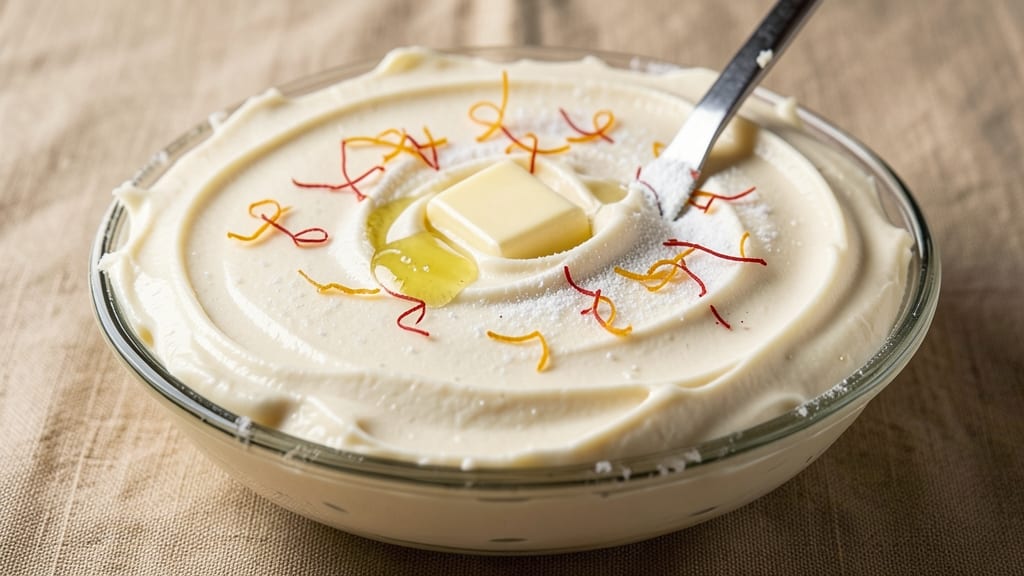
This amazing cream cheese frosting recipe transforms simple ingredients into a silky, tangy-sweet spread that’ll make your desserts irresistible. 💛 The secret lies in balancing room-temperature cream cheese and butter with powdered sugar for that perfect, pipeable consistency—no lumps, no graininess, just pure decadence.
What sets this frosting apart is its versatility—whether you're piping swirls on a rich chocolate cake, dolloping onto vanilla cupcakes, or glazing donuts, it delivers that signature tangy richness without overpowering.
The key? Whipping it just until smooth (not overmixing!) and letting it rest for 10 minutes before using.
By the time you're done, you'll have a frosting so creamy and flavorful it’ll disappear faster than you can say "second slice." The texture is light yet stable enough to pipe, and it stays fresh for up to 5 days in the fridge—or freeze it for months.
Trust me, once you try this, store-bought frosting won’t stand a chance.
Ready to elevate your desserts? This recipe is your new go-to for foolproof, restaurant-quality frosting that’s easier to make than you’d think. Let’s get started!
Ingredients for amazing cream cheese frosting
Seven ingredients create this restaurant-quality frosting that's smoother than store-bought.
| Ingredient | Amount | Notes |
|---|---|---|
| Cream Cheese (Full-Fat, Room Temperature) 🧀 | 8 oz | 8 oz block, not tub |
| Unsalted Butter (Room Temperature) 🧈 | 4 oz | European-style preferred |
| Powdered Sugar (Confectioners' Sugar) 🍚 | 3 cups | Sifted for smooth texture |
| Vanilla Extract 🌿 | 1 tbsp | Pure Madagascar preferred |
| Lemon Juice (Freshly Squeezed) 🍋 | 1 tsp | Bright, not bottled |
| Diamond Crystal Kosher Salt 🧂 | ¼ tsp | Fine grain preferred |
| Heavy Whipping Cream (Optional for Extra Decadence) 🥛 | ½ cup | 35% fat for stability |
The cream cheese is non-negotiable—full-fat, block style gives the best texture. Philadelphia brand works perfectly, but any thick, creamy block will do. Room temperature is key: cut the block into cubes and let it sit for 30 minutes before mixing. Butter matters too—European-style has higher fat content, which prevents graininess. Skip the margarine; it's a game-changer. Powdered sugar? Confectioners' sugar is a must—regular granulated won't dissolve properly. Sift it first to avoid lumps in your final frosting.
No vanilla extract? Vanilla bean paste works beautifully, or even a scraped vanilla bean. Short on lemon juice? Lime zest at half the amount adds a bright twist. The optional heavy cream is only for extra decadence—skip it if you prefer a lighter frosting. For a dairy-free version, swap cream cheese for vegan cream cheese and butter for coconut oil. The salt might seem insignificant, but it balances the sweetness beautifully—Diamond Crystal dissolves perfectly without graininess. If you're making this ahead, store the ingredients separately until ready to mix.
This frosting keeps beautifully—5 days in the fridge sealed in an airtight container. For longer storage, freeze in 1-tablespoon portions for easy thawing. Thaw overnight in the fridge, then whip gently to restore smoothness. The texture improves after resting for 10 minutes before piping. For extra stability when piping, chill the bowl in the freezer for 5 minutes before using. Trust me, the wait is worth it for that perfect swirl.
Why You'll Love This Recipe
- No Stand Mixer Needed: I swear by this—just a sturdy spoon and a bowl. The cream cheese and butter soften so fast when you let them sit out for 10 minutes (yes, I set a timer), and then it’s all about folding in the powdered sugar until it’s silky. No electric mixer here, just elbow grease that pays off with the smoothest texture.
- Bright Tangy Magic: That splash of fresh lemon juice? It’s the secret weapon. The vanilla makes it rich, but the citrus cuts through the sweetness like a breath of fresh air—especially when you’re drowning in powdered sugar. Honestly, it’s the kind of flavor that makes me reach for seconds without even thinking.
- Cupcakes to Cake Pops: Seriously, this frosting does it all. Slather it on cupcakes for a party, pipe it into a sheet cake for birthdays, or—here’s my hack—roll it into cake pops for a last-minute dessert. The lemon keeps it from getting too heavy, so it stays light and spreadable no matter what you’re frosting.
- Half the Recipe Lasts Days: Between us, I make a double batch and freeze half. The frosting thaws in minutes and tastes just as good as the day it was made—no weird texture changes, no weird aftertaste. Plus, powdered sugar is cheap, so you’re not breaking the bank when you inevitably make too much. (Spoiler: You will.)
Step-by-step instructions for silky cream cheese frosting
Here's how to create the perfect, velvety spread that'll elevate any dessert.
👨🍳 Step 1: Prepare Your Ingredients for Maximum Success
Start by letting the 8 oz cream cheese and 4 oz unsalted butter sit at room temperature for at least 30 minutes before beginning. You want them soft enough to press gently with your finger but not melted or greasy. This ensures smooth blending without lumps.
Sift the 3 cups powdered sugar through a fine-mesh sieve directly into a large mixing bowl. This removes any clumps and creates a cloud-like texture for your frosting. Keep the vanilla extract, lemon juice, and salt ready in small bowls for easy access during mixing.
I always use a stand mixer for this recipe—it gives you that perfect light, airy consistency. If you don't have one, a hand mixer will work, but you'll need to be patient and mix on low speed for longer periods to achieve the same result.
🍳 Step 2: Beat Cream Cheese and Butter Until Fluffy
In your stand mixer fitted with the paddle attachment, combine the room-temperature cream cheese and butter. Beat on medium speed for 2-3 minutes until completely smooth and pale in color. This step is crucial—you're incorporating air at this stage, which will give your frosting that signature light, silky texture.
Here's the thing—don't rush this part. You'll know it's ready when the mixture looks like thick, pale ribbon when you lift the paddle. If it still looks curdled or has streaks of butter, keep mixing for another 30 seconds. This ensures no grainy texture in your final frosting.
Real talk: If your cream cheese has any lumps, strain it through a fine-mesh sieve before adding to the mixer. I've learned the hard way that even small lumps can ruin the smooth finish.
🥘 Step 3: Gradually Add Powdered Sugar for Perfect Consistency
With the mixer running on low speed, gradually add the sifted powdered sugar, about ½ cup at a time. This slow addition prevents a sugar shock that could cause the mixture to seize up or become grainy. After each addition, mix for 30 seconds to incorporate before adding more.
You'll notice the mixture will look dry and crumbly at first, but keep mixing. The sugar will gradually dissolve into the fat, creating that perfect spreadable consistency. If you add all the sugar at once, you risk ending up with a thick, clumpy mess that's impossible to fix.
Once all the powdered sugar is incorporated, increase the speed to medium-high and beat for another 2-3 minutes. The frosting should be light, fluffy, and smooth, with no visible sugar granules. If it's still too thick, we'll fix that in the next step.
🍽️ Step 4: Add Flavorings and Adjust to Ideal Texture
With the mixer running on low speed, add the 1 tbsp vanilla extract, 1 tsp lemon juice, and 0.25 tsp kosher salt. Mix for 30 seconds to combine these flavorings evenly. The lemon juice brightens the sweetness while the salt enhances all the flavors—trust me, it makes a difference.
Now for the optional but oh-so-worth-it upgrade: Add the 0.5 cup heavy whipping cream and mix on medium speed for 1-2 minutes. This transforms your frosting from good to extraordinary, giving it that ultra-smooth, almost mousse-like texture. If you skip this, your frosting will still be delicious—just slightly thicker.
For the perfect consistency, you want a frosting that's smooth enough to pipe but thick enough to hold its shape. If it's too thick after adding the cream, mix in 1-2 tablespoons of milk or heavy cream at a time until it reaches your desired consistency. If it's too thin, add 1-2 tablespoons more powdered sugar and mix until smooth.
⏰ Step 5: Chill and Use for Best Results
Transfer your frosting to a clean bowl and cover it with plastic wrap, pressing the wrap directly onto the surface to prevent a skin from forming. Refrigerate for at least 30 minutes before using. This chilling step is crucial—it allows all the flavors to meld together and gives you that perfect, stable consistency for piping or spreading.
When you're ready to use it, give the frosting a quick stir if it has separated. It should come together smoothly. If it's still too thick after chilling, let it sit at room temperature for 5-10 minutes before using. The frosting will be at its peak texture and flavor after 1-2 hours of chilling, so plan accordingly.
Here's the moment that matters: Your frosting should be cool, smooth, and spreadable—almost like a cross between buttercream and mousse. If you've followed all these steps, you'll have a frosting so good it'll make even the most seasoned bakers take notice. Now go ahead and spread it, pipe it, or dollop it onto your favorite desserts!
Pro Tips For Making Amazing Cream Cheese Frosting
- SOFTEN THE CREAM CHEESE: DESCRIPTION:
- WEIGH THE POWDERED SUGAR: DESCRIPTION:
- BEAT THE BUTTER FIRST: DESCRIPTION:
- LEMON JUICE IN STAGES: DESCRIPTION:
Essential equipment for this dish
Stand Mixer Essentials
A stand mixer with a paddle attachment is non-negotiable for this recipe—it creates that signature light, airy texture by incorporating air efficiently. I recommend the KitchenAid Artisan Series for its reliable performance and durability.
If you don’t have one, a hand mixer works, but you’ll need to mix on low speed for longer to avoid overheating the fats. 💛
Mixing Bowls Matter
Use a large, sturdy mixing bowl (at least 4-quart capacity) to prevent spills and ensure proper mixing. I prefer stainless steel bowls because they’re easy to clean and don’t retain flavors.
Avoid glass bowls—they can crack under the mixer’s force. For extra stability, place the bowl on a non-slip silicone mat to prevent it from shifting during mixing.
Sifting Tools for Smooth Frosting
A fine-mesh sieve is a game-changer for sifting the powdered sugar—it removes clumps and creates a cloud-like texture. I love the OXO Good Grips Sifter for its ergonomic handle and durability.
If you don’t have one, a wire mesh strainer works in a pinch, but it won’t be as precise. Sifting also helps prevent graininess in your final frosting.
Piping Bags and Tips
For professional-looking swirls and rosettes, invest in disposable piping bags (I use Ateco brand) and a Wilton 1M tip for smooth, even lines. If you’re just spreading frosting, a spatula or offset spatula works perfectly.
For extra stability when piping, chill the frosting and piping bag in the fridge for 5 minutes before using—this prevents sagging.
Measuring Tools for Precision
Accurate measurements are key to this frosting’s success. Use a digital kitchen scale for the cream cheese and butter to ensure consistency—8 oz cream cheese and 4 oz butter make all the difference.
For powdered sugar, a dry measuring cup with a built-in leveler (like Weigh Scale by Oxo) ensures you get the exact 3 cups needed. Precision here prevents a frosting that’s too thick or too thin.
Storage Containers
Store leftover frosting in an airtight container (I recommend Glasslock containers) to keep it fresh for up to 5 days in the fridge. For freezing, use silicone ice cube trays for portion control—thaw overnight in the fridge before whipping gently to restore smoothness.
A plastic wrap directly pressed onto the surface prevents a skin from forming, making it easier to reuse.
Nutrition facts
Frequently asked questions
Can I substitute regular sugar for powdered sugar?
No, you can't use regular granulated sugar—it won't dissolve properly and will create a grainy texture. Powdered sugar (confectioners' sugar) is essential for that silky, smooth consistency. If you absolutely must, you could blend granulated sugar in a food processor, but it won't be as fine or dissolve as well.
Why does my frosting look curdled or lumpy?
This usually happens when ingredients aren't at room temperature or if you add sugar too quickly. Always let cream cheese and butter sit for 30 minutes before mixing, and add powdered sugar gradually. If lumps appear, strain the mixture through a fine-mesh sieve before using.
How do I make this frosting dairy-free?
Swap the cream cheese for 8 oz vegan cream cheese> and replace butter with 4 oz coconut oil> (solid at room temperature). Use the same measurements for powdered sugar and flavorings. The texture will be slightly different but still delicious! For extra stability, add 1 tbsp more coconut oil>.
Can I color this frosting for special occasions?
Use gel food coloring> (not liquid) to avoid altering the consistency. Start with ½ tsp> and mix well, then add more gradually. For pastel shades, use 1 tsp>. Let the colored frosting rest for 10 minutes> before piping to ensure even color distribution.
What's the best way to store leftover frosting?
Transfer to an airtight container> and refrigerate for up to 5 days>. For longer storage, freeze in 1-tbsp portions> in silicone molds. Thaw overnight in the fridge, then whip gently with a hand mixer to restore smoothness. Press plastic wrap directly on the surface to prevent drying.