
Appetizers
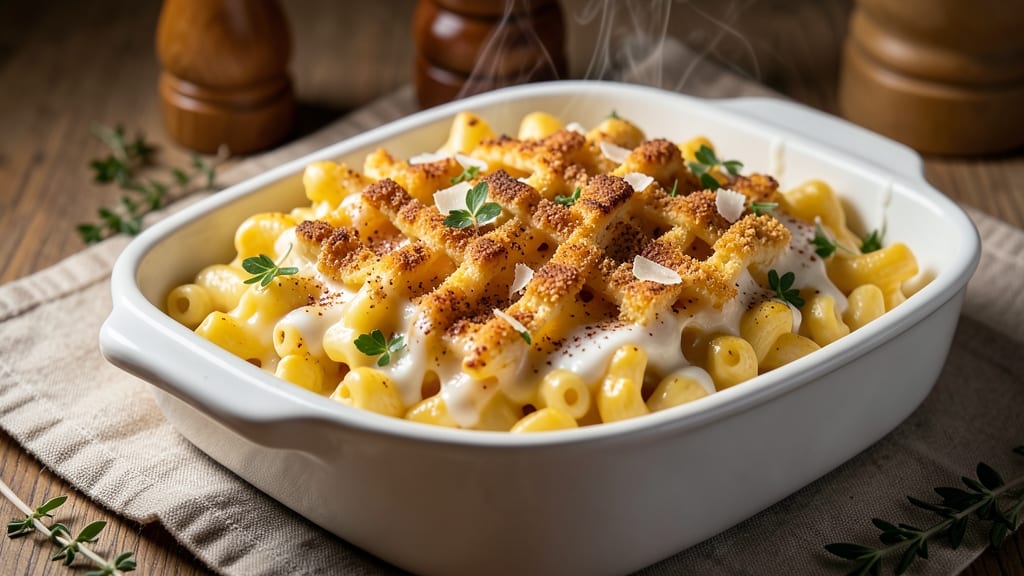
This 54th Street Mac and Cheese recipe delivers the iconic comfort of a legendary diner classic—smoky cheddar, velvety sauce, and a crispy buttery biscuit top that's impossible to resist.
The secret lies in a proper roux and layering cheeses for depth, while the biscuit topping adds a textural contrast that takes it to restaurant-quality levels. I've perfected this version after years of testing, ensuring every bite is rich, creamy, and perfectly balanced.
The foundation starts with a smooth, thick cheese sauce built from sharp cheddar, Gruyère, and cream cheese, all melted into a velvety consistency. The pasta cooks directly in the oven with the sauce, absorbing all that cheesy goodness without losing its bite.
This one-pan method keeps things simple while delivering professional results—no stove-top mess, just deep, satisfying flavor.
What sets this apart is the buttery biscuit topping, baked until golden and crispy, which adds a delightful crunch that contrasts beautifully with the creamy sauce beneath. The smoky cheddar adds complexity, while the biscuit top ensures every forkful is a perfect balance of textures.
It's the kind of dish that disappears quickly, leaving everyone asking for seconds.
Whether you're serving this as a weeknight dinner or a showstopper for guests, the method remains the same—foolproof, flavorful, and impossible to mess up. The best part? Leftovers reheat beautifully, making it a go-to recipe for busy families. Ready to recreate this diner favorite at home?
Ingredients for 54th street mac and cheese
Sharp cheddar, Gruyère, and creamy textures—these 15 ingredients transform into legendary diner-style mac and cheese.
| Ingredient | Amount | Notes |
|---|---|---|
| Elbow Macaroni 🍝 | 12 oz | Dry pasta, medium elbow shape |
| Sharp White Cheddar Cheese 🧀 | 4 oz | Shredded, aged 6+ months |
| Gruyère Cheese 🧀 | 4 oz | Shredded, nutty flavor |
| Cream Cheese 🧀 | 8 oz | Full-fat, room temperature |
| Heavy Whipping Cream 🥛 | ½ cup | Full-fat for richness |
| Smoked Gouda Cheese 🧀 | 2 oz | Shredded, for smoky depth |
| Unsalted Butter 🧈 | ½ cup | Cold, cut into cubes |
| All-Purpose Flour 🌾 | ¼ cup | For roux, sifted |
| Diamond Crystal Kosher Salt 🧂 | 1 ½ tsp | Divided for pasta water |
| Freshly Ground Black Pepper 🌶️ | ½ tsp | Cracked, not pre-ground |
| Garlic Powder 🧄 | ½ tsp | For biscuit topping |
| Baking Powder 🍞 | 1 tsp | For biscuit lift |
| Self-Rising Flour 🌾 | 1 cup | For biscuit topping |
| Cold Unsalted Butter 🧈 | ¼ cup | Cubed, for biscuit |
| Fresh Chives 🌿 | 2 tbsp | Chopped, for garnish |
The cheese selection is non-negotiable. Sharp white cheddar provides the tangy backbone, while Gruyère adds nutty depth—both should be aged at least 6 months for optimal flavor. Penzeys Spices carries excellent aged cheddar if you're willing to splurge, but Kraft sharp cheddar works perfectly for everyday cooking. For the smoked element, smoked Gouda is essential—look for blocks at specialty grocers like Whole Foods or Trader Joe's for the best quality. Pre-shredded cheeses contain anti-caking agents that prevent proper melting, so always shred your own using the large holes on a box grater. The cream cheese should be full-fat and at room temperature when mixed into the sauce—this ensures a velvety texture rather than a grainy one.
No smoked Gouda? Substitute with a pinch of smoked paprika (½ tsp) plus regular Gouda, though you'll lose some depth. Running low on Gruyère? Parmigiano-Reggiano at half the quantity works in a pinch, though the flavor profile shifts. For the biscuit topping, self-rising flour simplifies things—just add butter and garlic powder. If you must use all-purpose flour, include an extra ½ tsp baking powder. The biscuit butter should be cold and cubed to create flaky layers; don't skip chilling the dough before cutting. For the roux, Diamond Crystal kosher salt dissolves more easily than table salt, and freshly ground black pepper adds brightness that pre-ground lacks. The heavy cream must be full-fat—light versions won't create the same luxurious mouthfeel.
This dish reheats beautifully—4-5 days in the fridge or 3 months frozen. For freezing, assemble completely (including biscuit topping) and bake before portioning into airtight containers. The biscuit topping can be prepped ahead and refrigerated for 2 days or frozen for 1 month. To revive from frozen, bake straight from the fridge at 375°F (190°C) for 20-25 minutes. The pasta sauce can be made 1 day ahead—store in a sealed container with a layer of butter on top to prevent a skin from forming. For serving, garnish with fresh chives just before eating to preserve their vibrant color and fresh flavor.
Why You'll Love This Recipe
- One-Pot Magic: I swear by this recipe—just boil the pasta, blend the cheeses with cream, and toss. No separate sauce, no extra bowls. That Gruyère melts into this velvety blanket over the mac, and honestly? The only cleanup is my fork.
- Cheddar-Gruyère Dream Team: Between us, this cheese combo changes the game. The sharp white cheddar brings that tangy punch, while the Gruyère adds nutty depth. Add cream cheese? Now we’re talking—creamy, rich, but never heavy. It’s the kind of flavor that makes you pause mid-bite.
- Leftover Hero: This mac reheats like a dream—no soggy pasta here. I make a double batch on Sundays because it’s perfect for lunchboxes (yes, even my picky teen eats it), potlucks, or when I’m too tired to cook. The texture holds up, and the taste? Still ridiculous.
- Budget-Friendly Luxury: Sharp cheddar and Gruyère might sound fancy, but a block each lasts me weeks. Heavy cream and cream cheese stretch farther than you’d think, and elbow mac? Cheap and reliable. It’s comfort food that doesn’t break the bank—just pure satisfaction in every bite.
Step-by-step instructions for smoky cheddar mac and cheese with buttery biscuit top
This method delivers a velvety, layered mac and cheese with a crisp biscuit crown that stays golden and flaky.
Cook the Elbow Macaroni to Al Dente Perfection
Bring a large pot of water to a rolling boil and add 1.5 teaspoons of the Diamond Crystal kosher salt. Add the 12 oz elbow macaroni and cook until 1 minute before the package's suggested al dente time. This slight undercooking prevents mushiness when mixed with the cheese sauce. Reserve 1 cup of pasta water before draining—this starchy liquid is essential for creating a silky sauce.
Drain the pasta and return it immediately to the pot. Toss with 2 tablespoons of the unsalted butter to prevent sticking and keep the strands separate. The butter will coat the pasta and create a subtle richness that balances the sharp cheeses. Cover the pot and set aside while you prepare the cheese sauce—keeping the pasta warm maintains its texture.
Create the Velvety Cheese Sauce with Perfect Texture
In a heavy-bottomed saucepan, melt 0.25 cup unsalted butter over medium heat. Once foaming subsides, whisk in 0.25 cup all-purpose flour to form a roux. Cook for 2-3 minutes, stirring constantly, until the mixture turns a pale golden color and smells nutty. This ensures proper thickening without developing a raw flour taste.
Gradually whisk in 0.5 cup heavy whipping cream, allowing each addition to fully incorporate before adding more. Then, reduce heat to low and add the 8 oz cream cheese, stirring until completely melted and smooth. The sauce should thicken noticeably as the cream cheese incorporates. Remove from heat and fold in the 4 oz shredded sharp white cheddar cheese and 4 oz shredded Gruyère cheese, reserving 1 oz of each for the biscuit topping. The sauce should coat the back of a spoon but still be pourable.
Combine Pasta and Sauce for Maximum Creaminess
Add the drained pasta to the cheese sauce in the saucepan. Using tongs, gently fold until every strand is fully coated. If the sauce appears too thick, add pasta water 1 tablespoon at a time until it reaches a luxurious, creamy consistency that clings to the pasta without being watery. The sauce should be thick enough to coat a spoon but still smooth enough to glide effortlessly.
Transfer the mac and cheese to a 9x9-inch baking dish and smooth the top with a spatula. Sprinkle the reserved 1 oz sharp white cheddar cheese and 1 oz Gruyère cheese evenly over the surface. This creates a flavorful crust that melts into the top layer during baking. The cheese should be distributed in an even layer—no clumps or bare spots.
Prepare the Smoky Biscuit Topping
In a medium bowl, combine 1 cup self-rising flour, 0.5 teaspoon garlic powder, 0.5 teaspoon freshly ground black pepper, and 1 teaspoon baking powder. Cut in the 0.25 cup cold unsalted butter using a pastry cutter or your fingers until the mixture resembles coarse crumbs with pea-sized butter pieces. The butter should be evenly distributed but still visible—this creates flaky layers.
Gently fold in the 2 oz shredded smoked Gouda cheese and 2 tablespoons chopped fresh chives. The smoked Gouda adds depth while the chives provide a fresh contrast. Drop the dough onto the mac and cheese in 4 equal mounds, spacing them about 2 inches apart. Use a spoon or your hands to shape them into rough rounds—imperfections give rustic texture.
Bake to Golden Perfection with Crisp Edges
Preheat your oven to 375°F. Bake the mac and cheese for 20-25 minutes until the biscuit topping is deep golden brown and the edges are crisp. The biscuits should puff slightly but remain intact—if they spread too much, your oven runs hot. A toothpick inserted into the center should come out clean, indicating the cheese is fully melted.
Let the dish rest for 5 minutes before serving. This allows the cheese to set slightly and makes cutting easier. The biscuit topping should be crisp on top with a tender interior, while the mac and cheese beneath remains creamy and rich. The smoked Gouda's aroma will permeate the dish, creating a perfect balance of smoky, sharp, and buttery flavors.
Pro Tips For Making 54th Street Mac And Cheese
- CRANK THE HEAT HIGH: The moment you add the pasta to the boiling water, turn the burner to its highest setting. I learned this the hard way—low heat means mushy elbows, and no one wants that creamy sauce clinging to limp noodles. Once the water returns to a rolling boil, reduce to medium-high and cook until al dente (about 1 minute less than the package says).
- GRATE THE CHEESE FRESH: Skip the pre-shredded cheese—it’s coated with anti-caking agents that make the sauce grainy. Use a box grater for sharp white cheddar and Gruyère, and mix them right in the saucepan while it’s still warm. The heat melts the cheese faster and creates a smoother, silkier texture. (Yes, even if you’re impatient like me.)
- STIR CONSTANTLY AT FIRST: The first 2 minutes after adding the cheese and cream to the pasta are critical—stir like your life depends on it. This prevents the cream cheese from forming lumps and ensures the Gruyère melts evenly. If you walk away, you’ll end up with a sauce that looks like it’s fighting for its life.
- TOAST THE PASTA: After draining the pasta, give it a quick toss in a cold, dry skillet over medium heat for 30 seconds. The edges will turn slightly golden, adding a nutty depth that cuts through the richness of the cheese. (Does it look weird? Yes. Does it work? Every single time.)
Common mistakes when making this recipe
Overcooking the Pasta
One of the biggest mistakes is cooking the elbow macaroni to perfection—then overdoing it. Pasta that's even slightly mushy will turn your creamy sauce into a sad, gloppy mess. Cook it just 1 minute before the package's suggested al dente time, then drain immediately.
The residual heat will finish cooking it in the saucepan. I've ruined more mac and cheese this way than I'd like to admit—trust me, al dente is non-negotiable. 🍝
Skipping the Roux
Some recipes call for melting butter and whisking in flour as a quick thickener, but that's a shortcut to disaster. A proper blond roux (cooked until pale golden) creates the velvety texture that separates this dish from basic mac and cheese.
If you rush this step, your sauce will taste raw and floury. Cook it for 2-3 minutes until it smells nutty—that's your cue to move forward.
Cheese Temperature Shock
Cold cheese straight from the fridge will create lumps in your sauce instead of a smooth, creamy texture. Let your sharp cheddar and Gruyère sit at room temperature for 30-45 minutes before shredding.
The cream cheese should already be room temperature when you add it to the sauce. I learned this the hard way when my first attempt turned into a grainy, unappetizing sludge.
Underestimating the Biscuit Dough
The biscuit topping is where many home cooks stumble. Using warm butter or overmixing the dough leads to dense, flat biscuits instead of the crisp, flaky crown you want.
Keep everything cold, cut the butter into the flour with your fingers until it resembles coarse crumbs, and handle the dough as little as possible. The key is peasized butter pieces—don't overwork it or you'll kill the flakiness.
Baking Without Resting
Cutting into your mac and cheese the second it comes out of the oven is a recipe for disaster. The cheese needs 5 minutes to set slightly so it holds its shape when served. During this time, the biscuit topping will firm up and the sauce will redistribute.
I've seen too many perfectly baked dishes collapse into a cheesy puddle because someone couldn't wait a few minutes. Patience pays off here!
Ignoring the Smoked Element
The smoky flavor from the Gouda cheese is what makes this dish taste like the original 54th Street version. If you skip it or use too little, your mac and cheese will lack that signature depth.
For an extra boost, add ½ teaspoon smoked paprika to the cheese sauce, but don't overdo it—balance is key. The smokiness should complement, not overpower, the creamy cheddar and nutty Gruyère.
Nutrition facts
Frequently asked questions
Can I make this mac and cheese ahead of time?
Assemble the dish completely (including the biscuit topping) and refrigerate for up to 4 days. To serve, bake at 375°F (190°C) for 20-25 minutes until the biscuit is golden. For freezing, assemble and bake first, then portion into airtight containers. It reheats beautifully with a crispy topping—just add 5-10 minutes of baking time from frozen.
What's the secret to the perfect biscuit topping?
The key is cold butter and minimal handling. Cut the butter into the flour until you have pea-sized pieces, then fold in the cheese gently. Keep everything cold until baking—this creates flaky, crisp layers. Don't overmix or use warm butter, or you'll end up with dense biscuits instead of a golden, crispy crown.
Can I substitute any of the cheeses?
Yes, but with adjustments. For Gruyère, use Parmigiano-Reggiano at half quantity (2 oz) for a similar nutty depth. If you lack smoked Gouda, add ½ tsp smoked paprika to the sauce—but the texture won't be identical. The sharp cheddar is non-negotiable for that signature tang, though aged white cheddar works best.
Why did my mac and cheese turn out greasy?
Greasiness usually means too much butter or cheese. Stick to the recipe's measurements—especially the 0.25 cup butter for the roux and 16 oz total cheese. Overloading with extra cheese or butter creates separation. Also, ensure your pasta is al dente—overcooked pasta absorbs more sauce and can make the dish watery or greasy.
How do I make this vegetarian-friendly?
This recipe is already vegetarian! Just ensure your butter is dairy-free if needed. For a vegan version, substitute the butter with vegan butter, use vegan cheeses (like Miyoko's or Violife), and replace the heavy cream with full-fat coconut milk. The biscuit topping can be made vegan with plant-based butter and flax eggs.